Facebook Adds Twitter-Style Hashtags in Eventual Bid for Real-Time Marketing Dollars

Written By Bejata Todd on Saturday, June 15, 2013 | 9:56 AM


By:   @adage.com Published: 


Facebook is now officially launching hashtags, a seminal Twitter feature that’s permeated pop culture.
It’s a move that could eventually put the two companies in more direct competition for real-time ad budgets, an area of heightened attention for marketers recently, but Facebook won’t be profiting from its hashtags out of the gate. Advertisers won’t be able to target people posting hashtags about a particular TV show or live sports event, and they won’t be able to sponsor a hashtag in the vein of promoted trends on Twitter.
A Facebook hashtag page for #FathersDa
Upon clicking on a Facebook hashtag, users will see a box that layers above the Facebook page they’re currently on and casts it into shadow. In the box, they’ll see the people and pages in their network that have used the hashtag in chronological order. They can also see mentions from people outside their network whose Facebook pages are public, but the focus is on people or brands that users have chosen to connect to.
It remains to be seen what Facebook will do to spur adoption of hashtags, but cross-posting from other networks will provide some viral hooks. For example, hashtags in tweets that people also set to publish on Facebook will open a Facebook hashtag page when someone else in the social network clicks on it.
Ultimately, Facebook wants to be thought of as the second screen as much as Twitter is. It has data to support that contention; there are between 88 and 100 million Americans using Facebook every night during prime time hours. And the “Red Wedding” episode of “Game of Thrones” earlier this month had 1.5 million mentions, according to a Facebook blog post.
However, the tricky part for Facebook is the lack of visibility into its data. While millions of people may be talking about “Game of Thrones” or the Oscars on Facebook, a relatively small percentage of them are doing so publicly, which is why business intelligence startups that focus on making social data actionable for marketers focus on Twitter and its rich deluge of public data. In light of that, another potential revenue stream from hashtags is an analytics product that would shed light on how hashtags are trending in short time increments across the network.
It's also possible that Facebook's foray into hashtags could provide a useful signal for its “graph search” product introduced in January, which is reliant on the "like" as an expression of interest. Likes are flawed signals, since users sometimes click on them arbitrarily or to satisfy a social obligation. But posting with a hashtag could be seen as a more tangible expression of affinity and could thus help to make graph search into a useful product.
In typical Facebook fashion, hashtags will first roll to a small percentage of the Facebook network so that the engineering team can evaluate how they’re working before making them available to the masses.

9:56 AM | 0 comments | Read More

Lessons From Amy's Baking Company: Seven Things You Should Never Do On Social Media

Written By Bejata Todd on Thursday, May 16, 2013 | 12:45 PM

 by Kelly Clay, Contributor

By now you have likely read or heard about Amy’s Baking Company Bakery Boutique & Bistro’s “epic” meltdown on Facebook. The restaurant in Scottsdale, Arizona is owned by Samy and Amy Bouzaglo, and was recently featured on an episode of Gordon Ramsay’s “Kitchen Nightmares”. Apparently, the Bouzaglo’s were such a “nightmare” to work with Ramsay fired them. Customers aren’t exactly fond of Amy’s either; reviews on Yelp YELP -3.1% call the restaurant “horrible” and accuse the owners of stealing waitresses’ tips. To make matters even worse, the Bouzaglos are notorious for their outrageous responses to these reviews on Yelp.

Yesterday’s incident with Amy’s Baking Company Bakery Boutique & Bistro has generated a lot of conversation about what not to do on social media as a brand. But underneath the typical commentary about bad brand behavior and reputation management are tips anyone (yes, even you) can takeaway from how the 

Bouzaglos have handled social media the past few years.

1. Don’t Reply To Everyone

Amy’s Baking Company Bakery Boutique & Bistro came under fire after Reddit discovered the episode of Amy’s on Kitchen Nightmares and began to lash out at the bakery on Reddit. In the episode the Bouzaglos are seen swearing at customers and staff, and soon the backlash moved to the Bakery’s Facebook FB -1.74% page. The Bouzaglos quickly jumped on Reddit, making fake accounts to reply to nearly every comment about their restaurant, as well as not only responding to comments on their Facebook page. Not only were the responses incredibly defensive, but in all caps, facilitating even more discussion and backlash. Had the Bouzaglos selectively responded to clarify the story (or even firmly defend their actions), there would likely have been much less backlash and aggression as they kept the fire going.

2. Don’t Respond to Trolls

Believe it or not, many people who comment on forums like Reddit or spam Facebook pages are trolls. (I know – this is a bit shocking.) When I first started writing I learned quickly to not “feed the trolls,” as that also adds fuel to the fire. Over the past few days the Bouzaglos made the classic mistake of doing exactly the opposite, which not only facilitated more aggression but also made them look like even easier targets to attack, as they clearly don’t understand social media. Not only is it critical not to reply to everyone (especially those who are critical of your content), but it’s especially important to ignore trolls, as they will – as the Bouzaglos know – only make your life hell.

3. Don’t React Right Away

If you do feel the need to respond to a critical comment – wait. You may be fuming, defensive, and angry that someone has insulted your hard work (or even just your thoughts.) Critical comments are personal and understandably can hurt your feelings – but if you respond when you’re fuming, defensive, and angry you will likely only make the situation worse for your brand (whether that’s your personal brand or your actual business.) Consider waiting 10 minutes, an hour, or even until the next day to respond. In situations where I really don’t know what to say, I like to ask a friend whether my response is appropriate – or if I should even send one at all. In many aggravated situations, silence is severely underrated.

4. Reddit is Not for the Weak

Reddit has become increasingly mainstream – especially after a few recent AMAs with high-profile people, such as the President. Unfortunately, many people don’t understand the culture of Reddit conversations and threads. All too often people or business owners will be mentioned (often critically) and feel a need to jump into the conversation to defend their project or brand. This, of course, is a bad idea – that is, unless you have thick skin. As demonstrated by those criticizing Amy’s, Redditors can be brutally honest. (In fact, the original thread about Amy’s was taken down as it escalated to the level of being a “witch hunt” against the owners of Amy’s.) If someone mentions you or your business on Reddit, seriously consider whether you can and want to get involved in the discussion.

5. Don’t Insult People
As all of our mothers said growing up: “If you don’t have anything nice to say, don’t say anything at all.” Of course, while others on the Internet are being rude, aggressive and critical, it’s hard not to be a jerk, too. But the Bouzaglos often responded to criticism (especially on Yelp) with unnecessary insults and derogatory language. It may be hard to handle feedback about your thoughts or work, but responding with personal attacks is always unprofessional. As any career coach, guidance counselor or even your boss would say now: It’s an important skill in life to be able to process criticism without taking it personally.

6. Learn When To Walk Away
Finally, when facing unwelcome feedback on social media, it’s important to know when to walk away. Not every mention deserves a response, not every blog post about you needs a comment, and not every Reddit thread needs an explanation. Even when there is heated debate about something you or your business did, it’s important to know when to say something (if you say something at all) and when to walk away from the conversation to avoid instigating more backlash. Often, your responses will be the only thing adding fuel to the fire. If you walk away, you’ll be surprised how quickly the negative conversation dies down – and people leave you alone.

7. Don’t lie
Earlier this afternoon Amy’s updated their Facebook page with the following post: “Obviously our Facebook, YELP, Twitter and Website have been hacked. We are working with the local authorities as well as the FBI computer crimes unit to ensure this does not happen again. We did not post those horrible things. Thank You Amy &Samy”. This not only violates many of the previous things you should not do on social media, but also lends to one last tip: don’t lie. If it’s not already obvious you are lying, it will end up backfiring and ruining your reputation. (That is, if like Amy’s, you haven’t already done so by making the previous social media mistakes.)
12:45 PM | 0 comments | Read More

Facebook needs to keep mobile momentum

Written By Bejata Todd on Wednesday, May 1, 2013 | 1:54 PM


Facebook finally decided to concentrate on mobile late last year, and its shares have recovered nicely from their post-IPO doldrums. To keep that momentum going, Facebook needs to prove that its mobile strategy is working.

Investors are scrutinizing the company's moves, and at first, even tepid mobile growth was enough to send Facebook shares soaring. That's because the company set expectations at rock bottom: Right after its May 2012 IPO, Facebook said it wasn't making "any meaningful revenue" from mobile.

Facebook turned a corner a few months later, when it launched a new Apple (AAPL, Fortune 500) iOS app and began showing ads to mobile users. It worked: Mobile accounted for 14% of the company's ad revenue in the third quarter, which ended September 30. Investors were thrilled, sending shares up 21%.

But some of that goodwill didn't last.

A few months later, Facebook revealed that mobile comprised 23% of its ad revenue in the fourth quarter.

That was a solid bump, but investors focused on the fact that mobile user growth slowed slightly -- and shares fell by 10%.

Clearly, investors are no longer impressed by mere "we're working on it!" assurances. Still, shares are up nearly 16% since Facebook's (FB) strong third-quarter report in October.

Expectations are high for Facebook's first-quarter report, due Wednesday after the market closes. Analysts polled by Thomson Reuters expect sales to have grown 36% over the previous year to $1.4 billion. Profit estimates came in at $308 million, after Facebook warned last quarter that its expenses will rise by 50% this year.

In the first four months of the year, the company has already released three major new products that are clearly aimed at maximizing ad revenue.

The first came last month, when Facebook unveiled a News Feed revamp centered around a more visual design that also includes bigger graphics for ads.

The second and third came too late to be included in Wednesday's results, but they're a clear sign of where Facebook is going. The beginning of this month brought Facebook Home, a custom startup screen for
Android smartphones that will eventually include ads. A week later, Facebook announced "Partner Categories," which lets advertisers target specific users based on their past buying history -- even if the purchases happened offline.

JP Morgan analyst Doug Anmuth said in a note to clients this month that he is "encouraged by newer formats and products." He also reminded his readers that social advertising is in its infancy.

Facebook is trying to prove that space has a viable business model. Its incremental moves have generated cautious optimism. Now it's time to give investors a real reason to believe.

1:54 PM | 0 comments | Read More

Facebook's Mark Zuckerberg Tops Apple's Tim Cook As Best CEO Of 2013

Written By Bejata Todd on Tuesday, March 19, 2013 | 3:49 PM

Facebook founder and CEO Mark Zuckerberg  
(Image credit: AFP/Getty Images via @daylife)

Facebook employees gave Mark Zuckerberg a 99 percent approval rating for his role as CEO of the popular social networking site, displacing 2012 leader  Apple CEO Tim Cook, who fell to 18th place, according to a new survey of employees by career site Glassdoor.
Zuckerberg’s ratings rose from 85 percent last year, while Cook’s dropped to 93 percent from 97 percent, Glassdoor said in its report today on the Top 50 CEOs of 2013. “CEO approval ratings are calculated similar to Presidential approval ratings; employees are asked: “Do you approve or disapprove of the way your CEO is leading the company?”Glassdoor said.
At least 100 employees needed to give approval ratings for the CEOs to make the list.
A variety of technology leaders earned top honors, including SAP’s co-CEOs, Bill McDermott and Jim Hagemann, who came in second with a 99 percent approval rating. EMC’s Joe Tucci ranked seventh, Qualcomm’s Paul Jacobs ranked eighth and Google’s Larry Page took 11th place. Salesforce CEO Marc Benioff, Amazon CEO Jeff Bezos, Intel’s Paul Otellini and Intuit’s Brad Smith were all in the Top 25.
In the bottom half of the list were Oracle’s Larry Ellison, who came in at 46th place, and Michael Dell, who is working on a plan to take the PC maker private after his turnaround efforts stalled. Dell ranked 49th. Still, they fared better than Steve Ballmer of Microsoft and Meg Whitman of Hewlett-Packard, who were absent from the Top 50 rankings.
Current and former employees described Facebook as an “intense and fun,” “awesome,” “amazing,” and “fantastic” place to work. Among the cons: “The free and tasty food, especially deserts, really didn’t help me stay keep very fit.”
“Hard core environment,” wrote one current software engineer. “If you don’t deal well with extra responsibility and require strong leadership instead of autonomy, you probably won’t have the best time.” In his or her advice to senior management, the engineer added, “Keep the hacker culture, beware process and corporate behavior. Always do the right thing for the world.”
As for Apple, many of the reviews seemed to come from retail employees, who praised the training they received but dinged the company for not allowing employees a chance to rise up through the ranks and shift into a job at the corporate offices. Employees also encouraged Cook to promote more from within.
“Listen to your employees,” wrote one current worker. “When they reach out to tell you that they’re getting burned out or need a change, even a temporary one, do something about it before it’s too late. Also, when you tell an employee that you’re going to do something to help, then do it. Focus more on employee development.”
source from: http://www.forbes.com/sites/connieguglielmo/2013/03/15/facebooks-mark-zuckerberg-tops-apples-tim-cook-as-best-ceo-of-2013/
3:49 PM | 0 comments | Read More

Survey: Most Americans take breaks from Facebook

Written By Bejata Todd on Thursday, February 7, 2013 | 7:14 AM

A new study finds that 61% of users have taken a break from Facebook, often for weeks at a time

By Heather Kelly, CNN
CNN) -- Facebook follows you everywhere. It's on phones and computers, at work and home, and in the news. So it's understandable that people might need a little rest from the social network.

New research suggests that Facebook fatigue may be setting in with some users. Twenty-seven percent of Facebook users surveyed in the U.S. plan to spend less time on the site in 2013, compared with only 3% who plan to spend more time, according to a study from the Pew Research Center's Internet & American Life Project.

(Another 69% of Facebook users say they plan to spend the same amount of time on the site this coming year.)

The Pew study also found that 61% of Facebook users have taken a break from the service for several weeks or more. During these breaks, the vast majority of Facebook vacationers don't delete their profiles.

The site boasts that it has more than a billion active users. Pew found that two-thirds, or 67%, of American adults who are online use Facebook.

The reasons people gave for taking a sabbatical from the network were varied. The most common motivation was not having enough time for the site, with 21% of people saying they were just too busy with real-life responsibilities to spend time reading posts, liking and commenting.

Other reasons for leaving: Ten percent called it a waste of time, 10% cited a lack of interest in the content, and 9% said they were unhappy with the amount of drama and gossip on the site. Only 4% of people mentioned privacy and security concerns as their reason for taking a breather.

Among the comments from those who took Facebook breaks: "I was tired of stupid comments." ... "(I had) crazy friends. I did not want to be contacted." ... "I took a break when it got boring." ... "It was not getting me anywhere." ... "You get burned out on it after a while." ... "I gave it up for Lent." ... "People were (posting) what they had for dinner." ... "I didn't like being monitored." ... "I got harassed by someone from my past who looked me up."... "It caused problems in my (romantic) relationship."

Not everyone who leaves Facebook comes back to the site. According to Pew, 20% of online adults who currently don't use Facebook formerly maintained a profile on the site. The number of Facebook users in the U.S. may be plateauing, as only 8% of non-users said they would be interested in joining.

Mark Zuckerberg's company needs to keep its users active on the site and mobile apps, especially since the pool of untapped of potential new members in the U.S. is dwindling. If Facebook starts to feel stale, more of its active users could take longer breaks or leave altogether, like they did with such formerly hot social networks as Friendster and MySpace.
7:14 AM | 0 comments | Read More

Why Facebook may want to track your location

Facebook is developing an app that would run in the background of smartphones even when not opened, a report says
By Doug Gross, CNN

(CNN) -- Facebook may be working on an app that will let your friends, or even complete strangers, know where you are at all times.

If that sounds unpleasant, even creepy, you're not alone. But it sounds an awful lot like a small but growing mobile sector in which users knowingly sacrifice some privacy in exchange for "social discovery."

And, as Facebook works to make money off its constantly growing list of mobile users, such a feature raises questions about how the company will use the personal info it would collect.

On Tuesday, Bloomberg reported that Facebook is developing a smartphone app that would track the location of users. The app would run in the background of smartphones even when not opened and is designed to help users find nearby friends, according to one of two unnamed sources cited in the article.

A Facebook spokeswoman told CNN that the company has no comment about the report.

Social discovery, or stalking?

Some observers have expected such a move by Facebook since last year when the social networking giant bought Glancee, a mobile app designed to help users find nearby friends.

That's similar to a handful of other mobile apps, such as Highlight, Banjo and Sonar. These services seem pitched mostly to a young, outgoing user base seeking existing or new pals for drinks, dancing, sipping coffee or sexual hookups. But, when applied to Facebook's purported 1 billion-strong membership, which includes everyone from teens to grandparents, it gives some privacy advocates pause.

"We've already seen some of the mishaps that can occur when location is used in unexpected ways," said Jules Polonetsky, director of the Future of Privacy Forum, a Washington-based think tank. "I think the challenge is that aggregating by location clearly might provide some really useful information. But there are a whole lot of social norms that can be stressed, by even public information."

Polonetsky cited Girls Around Me, an app that rounded up check-ins by women on Foursquare and Facebook to let users, presumably guys on the prowl, know which bars, clubs or other spots currently had lots of women in them. Girls Around Me raised concerns about stalking and eventually got booted from Apple's App Store.

"It didn't clearly violate any of the specific rules that the App Store lays out, other than extreme creepiness," Polonetsky said. "But creepy is sometimes in the eye of the beholder. One person's creepy is another tech enthusiast's tool."

The key, he said, would be whether Facebook clearly sets out guidelines for how such an app would be used. He said members should be allowed to opt in to the service, not automatically be enrolled in it unless they opt out.

"You don't want people ever sharing information without knowing, and I don't think Facebook is going to be in a position to do that," he said.

The future of social sharing

Heralded briefly as the next wave of social sharing, a handful of these location-based "social discovery" apps launched last year amid some degree of hoopla. But a year later, none have gained much traction among mainstream audiences in the way Twitter, Foursquare and some other apps did before them.

Paul Davison, CEO of discovery app Highlight, acknowledges it's been a slow burn for a service such as his. A year after launching, Highlight still won't release how many active users it has (though he said membership has tripled in six months).

Privacy concerns, he said, are part of the challenge.

"That's not surprising," Davison said. "I think that any time a technology comes out that allows us to share in a way we haven't been able to share before, you see this really familiar pattern.

"Most of us look at it and think, 'That's weird. That's creepy and I don't like it.' What you normally see is a subset of people saying 'That is kind of crazy, but I'll try it out.' And they see it's pretty rewarding and fun."
Davison considers apps such as his no less than the future of social sharing.

"If you look at what's happened on the Web over the last 5 to 10 years with Facebook and other services, we love to share," he said. "We love to talk about ourselves ... and we're obsessed with learning about other people."

But for some, he said, the real world can be like "some bizarre social network where every profile is a single photo." On Highlight and similar apps, profiles are meant to let users know if someone around them shares their interests and might be a fun person to meet.

"It's a big change in how the world works," he said. "It's hard for me to think of a bigger shift in how the world works, but it's not going to happen overnight."

How Facebook might use app

Facebook-owned Glancee was somewhat more limited, pinging users when people already in their other social networks, such as Facebook, Twitter or LinkedIn, are around.

But for the folks from Mark Zuckerberg's company, such an app could have another payoff. Literally.

It would provide Facebook with reams of new data about not just where its users frequently go, but where they are right now.

Facebook said it doesn't sell its data to advertisers. But it definitely leverages the data to help those advertisers target potential customers. It's not hard to envision ads showing up letting users know that there's a 2-for-1 drink special right around the corner, or that the restaurant next door has the best burger in town.

"They need to make money on mobile, and that's what they've been pushing for since the IPO," said Justin Lafferty, co-editor of AllFacebook, an unofficial Facebook blog. "They're trying to build the technology first, then maybe find out how to build ads into it, too."

Lafferty, who wrote about this week's Bloomberg report, said Facebook could launch a social discovery app separate from its main mobile app -- at least at first.

"That's sort of how Facebook usually works," he said. "They'll test features, then they'll implement them all in the native app."

How will users react to such an app, were Facebook to launch one? Privacy advocate Polonetsky said that remains to be seen.

"The reality is that, for most people, even if things are broadcast to all their friends and the public, they still have some expectation about the way that it's used," he said. "I totally get that my neighbor knows when I come and go and may even say, 'We haven't seen you in a while -- is everything OK?'

"But if someone else seemed to know about my comings and goings and offered me a product or service based on it? I don't know."
7:10 AM | 0 comments | Read More

10 Legendary Business Cards of Famous People

Written By Bejata Todd on Monday, January 28, 2013 | 3:50 PM

A business card is an integral part of every businessman. Mark Zuckerberg, Larry Page and Steve Jobs have printed numerous business cards for business partners, investors and customers. On the way to get rich, these business attributes could be lost. But fortunately, their early age visiting cards have survived and now everyone can see legendary design of the billionaire business cards.

Maybe it’s your time to grasp an idea of a lucky business card? View 10 business cards that belong to most wealthy entrepreneurs and public leaders and make free custom visiting cards like these for you today!

Mark Zuckerberg Business Card

Mark Zuckerberg Business Card
Yes, that’s a famous business card of Facebook founder “I’m CEO, bitch”. Laconic and clear.

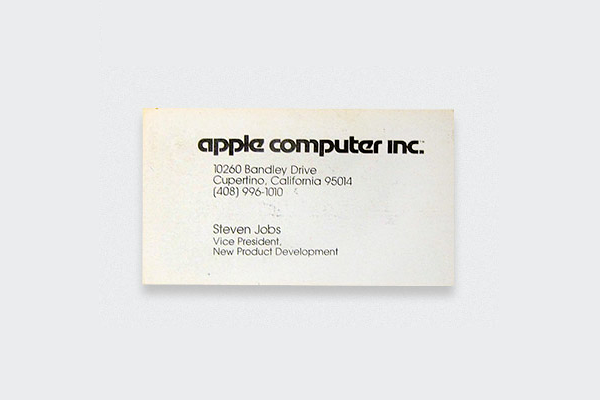
Steve Jobs Business Card

Steve Jobs Business Card
Steve Jobs old business card is like iPhone-iPad design: a plain black and white palette. It’s easy to read.

Larry Page Business Card

Larry Page Business Card
Before Eric Schmidt, Larry Page worked as Google CEO. Here’s a copy of his colorful visiting card.

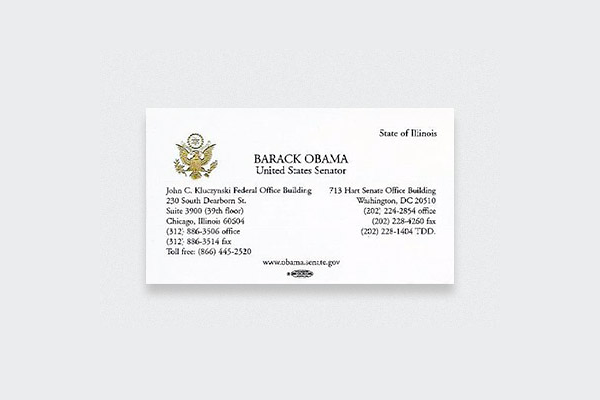
Barack Obama Business Card

Barack Obama Business Card
It’s a Barack Obama business card when he was a senator.

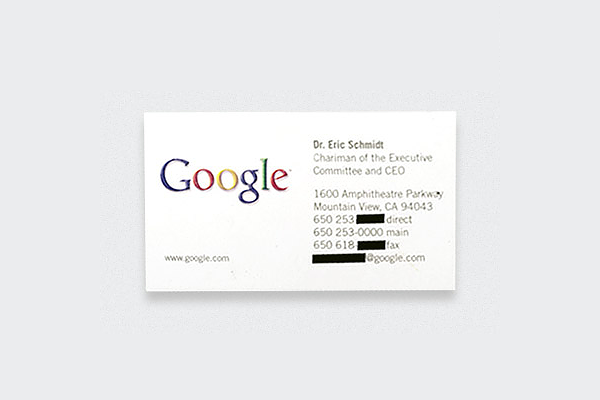
Eric Schmidt Business Card

Eric Schmidt Business Card
Correct spelling is a big problem even for Google CEO.

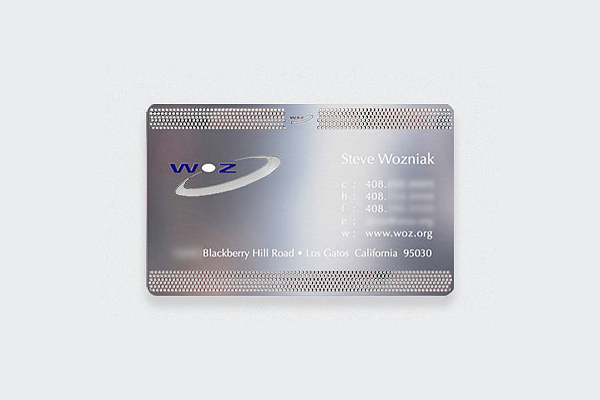
Steve Wozniak Business Card

Steve Wozniak Business Card
A stylish custom vising card of Apple co-founder.

Donald Trump Business Card

Donald Trump Business Card
Mr. Trump has added his signature to his visiting card.

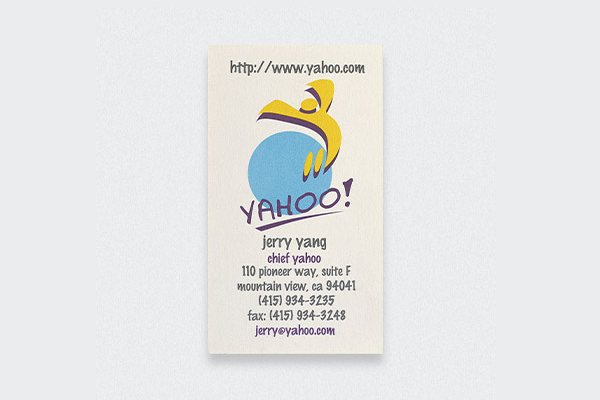
Jerry Yang Business Card

Jerry Yang Business Card
This guy does not sell boards – it’s Yahoo CEO business card.

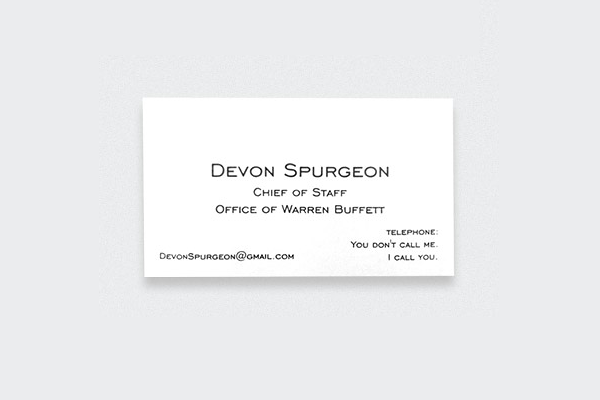
Devon Spurgeon Business Card

Devon Spurgeon Business Card
Clear final statement of Warren Buffett employee. Now you know who is the boss.
3:50 PM | 0 comments | Read More

Facebook charges $100 to message Mark Zuckerberg

Written By Bejata Todd on Monday, January 14, 2013 | 7:31 AM

 
Facebook says it is experimenting with "extreme price points" for its new messaging feature to discourage spam.
 
NEW YORK (CNNMoney)

Want to message Mark Zuckerberg on Facebook? For $100, your note will land in his inbox.

Traditionally, if a Facebook user messages someone outside his or her network, the missive gets sent to the "Other" mailbox -- a rarely checked purgatory most users don't even know exists. It's a practice intended to protect users from a spam deluge

Facebook said in December that it would begin testing out paid messages, allowing users to contact people with whom they have no direct connection in return for a fee. Facebook didn't say at the time how much it would cost, but the answer turns out to be "a lot."
Mashable discovered on Thursday that sending a message to Facebook founder Zuckerberg carries a $100 price tag. That's also what it costs to message Facebook COO Sheryl Sandburg , CFO David Ebersman, and several other Facebook members CNNMoney tried, such as Digg founder Kevin Rose.
"We are testing some extreme price points to see what works to filter spam," a Facebook representative told CNNMoney.

The messaging fee is one of several new revenue streams Facebook is testing out. The company has traditionally drawn most of its revenue from advertising sales, but its latest experiments explore generating cash directly from its 1 billion members.

Ahead of the holidays, Facebook (FB) launched"Facebook Gifts," allowing users to purchase real-world gifts for their Facebook friends. In October, the social network started testing out a "Promote" feature that lets users pay $7 to broadly broadcast important pictures or announcements. To top of page
7:31 AM | 0 comments | Read More

Mark Zuckerberg Finds Giving Spirit, Pledges Nearly $500 Million To Silicon Valley Foundation

Written By Bejata Todd on Wednesday, December 19, 2012 | 8:24 AM


Facebook CEO Mark Zuckerberg found his giving spirit on Tuesday with a $500 million donation to improve Silicon Valley education. (Photo via Getty Images)

by http://blogs.forbes.com/ryanmac/

Two years ago, Facebook cofounder Mark Zuckerberg and his wife Priscilla Chan signed The Giving Pledge, a public commitment to give away 50% of their wealth or more during their lifetimes or upon their deaths. Looks like the Silicon Valley power couple are starting early.

On his Facebook page Tuesday, the $13 billion CEO announced that he donated 18 million of his company’s shares to the Silicon Valley Community Foundation. This comes after the 28-year-old Zuckerberg pledged $100 million to Startup:Education in 2010 to improve Newark schools.

“Together, we will look for areas in education and health to focus on next,” Zuckerberg wrote on his Facebook page. “I’m hopeful we’ll be able to have as positive an impact in our next set of projects.”

The shares have already been donated to the foundation according to a filing with the Securities and Exchange Commission. As of Facebook’s closing price on Tuesday of $27.71, the gift is worth a little more than $498 million, making it the largest single philanthropic donation to education this year.

“This is great news for people who are passionate about improving public education,” said Jen Holleran, executive director of Startup:Education, which is a supporting organization of the Silicon Valley Community Foundation. “Mark’s commitment to dramatically improving the public schools in Newark has been making exciting progress, and we’re thrilled to know that his larger dedication to philanthropy is continuing.”

original source: www.forbes.com
8:24 AM | 0 comments | Read More

The Facebook Indicator: What ‘Likes’ Can Reveal About Stock Performance

Written By Bejata Todd on Sunday, November 11, 2012 | 7:11 AM

Whether you love it, hate it, use it, own the stock or think it's just a fad, there's no denying that Facebook (FB) is at the center of a fast developing and largely unproven experiment. Even the company's famous billionaire co-founder & CEO Mark Zuckerberg would likely concede that the present state of social media advertising and fan pages has not developed all that much beyond trial and error.

And yet, the stakes could not be higher and the interest more intense about any information that might suggest, one way or the other, that the experiment is either working or failing. This is, of course, precisely why the debut of the Wired Social Index caught our eye. We discuss the budding benchmark in the attached video, and try to discern whether the most "liked" companies are getting any bang for their Facebook buck.

"So the index is an attempt to look at if there is a correlation between popularity on Facebook and how your stock performs in the market," says Michael Copeland, senior editor at Wired magazine. He says the six-month old project is essentially an effort to determine if "Facebook is a platform that can boost your company in sales and ultimately in the stock market."

The index consists of only the top 9 most "liked" companies on Facebook, which include Coca Cola (KO), Walt Disney (DIS), Viacom (VIA), Nike (NKE), Starbucks (SBUX), McDonald's (MCD), Limited (LTD), Monster Beverage (MNST), and Wal-Mart (WMT). While Copeland says they are ''starting to see some correlation between Facebook popularity and market performance", a longer dated back test over the past 12 months, showed the 9-stock index up about 12% and performing almost in-line with the broader market.

In the meantime, as the "Likes" keep mounting, and the clicks keep counting, social media hawks will be paying close attention to see if fans - and their friends - truly do become customers.

"Facebook needs to prove that it has legs as an advertising platform and that it can contribute lots of value to advertisers," says Copeland.

It's the Wired Social Index and the question now is, do you like it? Let us know in the comment section below or visit our Facebook page!
7:11 AM | 0 comments | Read More

Who is the next Steve Jobs (and is there one)?

Written By Bejata Todd on Wednesday, October 3, 2012 | 7:11 AM


(CNN) -- It's a loaded question, one with no clear answer. But in the year since Apple's co-founder and
visionary CEO died, it's been asked in tech circles over and over:

Who is the next Steve Jobs?

There's one easy response. It's safe to say that no figure in the tech industry will perfectly duplicate the unique blend of vision, salesmanship, mystique and eye for detail possessed by Jobs, who died one year ago Friday.

And it's complicated further, some say, by the fact that for much of his own life, many wouldn't have predicted Jobs himself would earn tech-icon status.

"Steve Jobs had a strange career. He really wasn't celebrated as a genius until really late," said Leander Kahney, editor of the Cult of Mac blog and author of books on Apple, including "Inside Steve's Brain."

Not until Jobs returned to Apple and introduced the iPod and iPhone did people begin to praise him as a modern-day Thomas Edison, Kahney said. "He was dismissed before then as a marketing guy, a fast talker who didn't know much about technology. He only really was lionized in the last four or five years."

But industry observers abhor a vacuum. Futile though it might be, it's perhaps human nature to speculate about who could emerge to fill the void left by the passing of tech's biggest personality and most recognizable face.

One can make cases for or against a handful of nominees. And no list is long enough to include an as-yet unknown creator who may be birthing the industry's next game-changer in a garage or dorm room somewhere.

But here are some names worth considering, with thoughts both for and against their candidacies:

Jeff Bezos, CEO, Amazon

Pros: Bezos actually has a host of traits that mirror Jobs. Like Jobs was with Apple, he's the founder of
Amazon as well as its CEO. Being a part of a company's life story helps. As much as anyone, Bezos also captures a bit of Jobs' panache at live events. At last year's rollout of the Kindle Fire, he got high marks for introducing a game-changing product in a stylized fashion, then getting off the stage. (Tech giants Google and Microsoft have been accused of being rambling and unfocused at similar unveilings.) Reports say Bezos shares Jobs' penchant for attention to detail (some would say micromanaging) and, like Jobs, he's been willing to take the company into new and unexpected directions.

"I've met Bezos personally, and he is mesmeric. Brilliant smile, quick mind, very engaging and decisive," Kahney told CNN. "He has the same obsession with the ordinary consumer; to make and sell things from the consumer's point of view. ... Bezos has Jobs' focus and drive. He's a little bit maniacal in his drive and ambition."

Cons: Despite the Kindle line, Amazon is, at its core, a content company. The mobile devices are a means of delivering books, music, movies and other data to customers as directly as possible. Will the public ever be as excited about the CEO of the company that peddles e-books and data-storage space as it was about the one that sold it its personal computers, laptops, phones and music players?

Mark Zuckerberg, CEO, Facebook

Pros: The Steves -- Jobs and Wozniak -- had their garage. Zuckerberg had his Harvard dorm room. And in those two rooms, perhaps the two best-known origin stories in tech were born. As head of the social network that has changed the way people use the Internet, Zuckerberg is maybe the only tech boss who, like Jobs, has become a household name. ("The Social Network" didn't hurt.) He created a product that millions of people now use. And he's even cultivated his own trademark, casual-wear style, as the Zuckerberg hoodie is now almost as iconic as Jobs' mock turtleneck.
"Zuckerberg has some of the characteristics (of Jobs), and perhaps the most important one -- the pursuit of a vision," Kahney said. "That sets him apart."

Cons: He's gotten better at speaking in public. But as a pitchman, Zuckerberg still falls miles short of the charismatic Jobs. It's seems Zuck would rather be the idea man behind the scenes than front-and-center when it comes time to sell the final product. Also, the fact that Facebook's stock price is not already racing toward Google/Apple heights doesn't help.

Tim Cook, CEO, Apple

Pros: Well, there's the obvious one. Job's was Apple's CEO. Now Cook is. At the helm of the company, Cook gets to be the face of every new innovation rolled out by Apple. He's got the biggest stage and brightest spotlight in which to put himself forward.

Cons: Cook comes from more of a business background than one of innovation and design. He may masterfully steer Apple's course for years to come, but, rightly or not, few observers at this juncture are inclined to give him credit for vision, or influence over products' design, the way they did Jobs. Plus, being Apple CEO after Jobs is like being the football coach who follows a retiring Bear Bryant or Vince Lombardi. What were those guys' names? Exactly.

Jonathan Ive, senior vice president, Apple

Pros: When Jobs stepped down, there were many who expected Ive, not Cook, to step up. Ive is senior vice president of industrial design and is believed to be the creative mind behind products from the Macbook Pro to the iPod to the iPad. The London native already has a knighthood, as well as a healthy dose of Jobs' true-believer passion for the product.

Cons: Well, he's not the CEO. (Nor is marketing mastermind Phil Schiller, another name bandied about to replace Jobs). To truly ascend to Jobsian levels, Ive would need to set out on his own -- which, at 45, is doable. It's hard to envision Ive bolting from Apple, where he's worked since 1992. But, boy, it would be fun to watch.

Marissa Mayer, CEO, Yahoo

Pros: If you need proof of how well Google alum Mayer is liked in Silicon Valley, just look at the number of folks she's been able to lure to join her at a Yahoo that was floundering when she took the reins in July. At Google, where the former engineer was the 20th employee, she's credited with everything from the clean design of the search page to becoming one of the leading public faces of the tech giant.

Cons: It looks like a turnaround has begun at Yahoo. But the job's still a long way from done. If Mayer becomes the face of a dramatic rebirth, she will have accomplished something few predicted. If she doesn't (the four CEOs before her all fell short), it likely won't hurt her reputation all that much -- but neither will it bump her up to the next level.

Elon Musk, serial entrepreneur

Pros: How's this for an origin story? Musk grew up in South Africa before leaving home at 17, without his parents' consent, rather than serve a compulsory stint in an army which, at the time, was enforcing the race-based apartheid system. He'd end up in the United States four years later -- although he'd already sold his first software, a video game called Blastar, when he was 12. Since then, all he's done is create publishing software Zip2 (sold to AltaVista for $300 million), co-found PayPal (he owned 11% of its stock when eBay bought it for $1.5 billion) and help create Tesla Motors, makers of the first commercial electric car. Oh, wait ... he also runs SpaceX, a company working on space exploration. Director Jon Favreau says Musk was his inspiration for Robert Downey Jr.'s Tony Stark character in the "Iron Man" movies.
"His ambitions are so huge," Kahney said. "He's definitely a ballsy character. And he's a good leader, like Jobs. He's surrounded himself with good people."

Cons: With the exception of Tesla, none of Musk's projects, so far, have directly involved consumer products. Tens of millions of people had something Jobs made in their pockets, on their desks or piping music into their ears. Among the public, Musk may be less well-known than all of the names above -- at least for now. But, at 41, he's got time to change that and it would be foolish to bet against him.

Seth Priebatsch, CEO, SCVNGR, LevelUp

Pros: Who? Priebatsch is the wild card on this list. But consider him the representative of a new generation of young, creative tech "makers" who could ascend to loftier heights in the years, or decades, to come. At 22, Priebatsch's SCVNGR raised more than $20 million in funding. He founded his first Web company at 12 and has moved on to start LevelUp, a mobile-payments system that's also raked in millions from investors. He got rock-star treatment for a speech he gave last year at South by Southwest Interactive. Plus, he's already cultivated a Jobs-like signature fashion statement -- his trademark orange sunglasses and shirts.

Cons: In the startup world, for every success story, there are countless washouts. Not every young turk even wants to be another Jobs, and not every killer app has the potential to make millions, or billions, of dollars -- even when they're well-liked and widely used.
7:11 AM | 0 comments | Read More

Wall Street waits for Apple, Facebook earnings

Written By Bejata Todd on Monday, July 23, 2012 | 10:55 PM

By Caroline Valetkevitch, Reuters

NEW YORK -- The trend of better-than-expected earnings will be put to the test in the coming week when investors hope Apple can exceed already high expectations for the tech giant and Facebook reports its first quarterly earnings.

Apple accounts for a significant proportion of the overall earnings of Standard & Poor's 500 components. S&P 500 earnings are expected to show a rise of 5.7 percent in the second quarter from a year ago.

Excluding the maker of the iPad, the rise is 4.8 percent, according to Thomson Reuters data.

Apple's results, due Tuesday, could help stocks build on this week's gains and counter investor worries over the euro zone crisis. More signs of financial stress in Spain on Friday caused stocks to give back some of the week's increase. The S&P 500 ended 0.4 percent higher for the week.

"Apple can drive the whole (tech) group," said Daniel Morgan, who helps manage about $3.5 billion at Synovus Trust Company in Atlanta.

"There's a huge psychological component as it relates directly to Apple. If they just blast numbers like they did last quarter, then obviously the perception will be everybody else did pretty good and Apple did fabulous."

Apple's expected strong performance is mainly why technology earnings growth has held up better than other S&P 500 sectors. The expected growth rate for the sector has gone from 6.9 percent in April to 8.7 percent as of Friday, the data showed.

Apple's earnings for the quarter are seen at $10.38 a share, based on Thomson Reuters I/B/E/S, which includes estimates from 43 analysts. That compares with a profit of $7.79 a share for the year-ago quarter.

Morgan said Apple's growth has largely depended on the success of its new products. "For the stock, to continue its trajectory at the pace it has, it's critical that they release these new products," he said. Apple's shares are up 49.2 percent for the year so far.

Apple does not give any clues on its future products, but the California company is widely expected to release its next-generation iPhone later this year. Wall Street has also set its heart on Apple launching a new "mini iPad" and the long-awaited television set in the near future.

Investors are likely to be just as keen to hear from Facebook when it reports on Thursday. Facebook's first results following its market debut could give investors another chance to indicate how they feel about the stock since its disappointing initial public offering.

Shares of Facebook, one of the most closely watched IPOs ever, lost ground after technical problems with its market debut on Nasdaq and as investors questioned its ability to rapidly increase advertising revenue.
Analysts said an earnings miss by Facebook could be disastrous for the stock, which closed Friday at $28.76, below its $38 offering price.

Investors are looking for executives to address a litany of concerns about the business, such as the efficacy of its online ads and the company's nascent efforts in mobile advertising.

Tech results also will be closely watched for signs of weak demand overseas, particularly from Europe.

Other technology companies expected to report next week include Texas Instruments and Amazon.com . Of the S&P sectors, technology has the highest sales exposure to Europe at about 25 percent, according to a
Bank of America/Merrill Lynch research note.

Among the other 138 S&P 500 companies reporting earnings are Ford Motor Co , United Parcel Service and Whirlpool Corp .

While the majority of companies have beaten earnings expectations, revenue performance has been the worst for S&P 500 companies since the first quarter of 2009.

With results in from 116 companies, just 43 percent of companies are beating revenue expectations.

Sixty-seven percent of companies are beating earnings estimates, compared with a long-term average of 62 percent, Thomson Reuters data showed.

"With global growth slowing down, it's not surprising we're going to see some mixed numbers on the revenue side," said Natalie Trunow, chief investment officer of equities at Calvert Investment Management in

Bethesda, Maryland, whose firm manages about $13 billion in assets.

While earnings are expected to dominate stock investors' attention in the coming week, the euro zone crisis is still capable of taking the spotlight.

"It's the default thing for people to focus on," said Eric Kuby, chief investment officer at North Star Investment Management Corp. in Chicago.

Spain will tap the markets Tuesday when it sells three- and six-month bills. It will also sell three- and five-year bonds on August 2. Spain's 10-year bond yields hit a euro-era high of 7.3 percent on Friday.

The week's U.S. economic data includes the Markit U.S. Manufacturing Purchasing Managers Index for July, due on Tuesday. June's reading marked the lowest showing since December 2010. 

10:55 PM | 0 comments | Read More

Yahoo and Facebook Settle Patent Dispute, Join Advertising Alliance

Written By Bejata Todd on Monday, July 9, 2012 | 3:12 PM

SAN FRANCISCO (AP) — Facebook and Yahoo have agreed to settle a patent dispute, averting a potentially lengthy battle over the technology running two of the Internet’s most popular destinations.
In dropping the lawsuits, the companies agreed to license their patents to each other. They are also agreeing to an advertising alliance that expands their existing partnership.

The advertising alliance could help Yahoo recover some of the revenue that it has been losing as marketers shift more of their spending to a larger and more engaged audience on Facebook’s online social network.
Friday’s settlement involves no exchange of money and comes after a months-long patent squabble between the two Internet icons.

The truce ends a conflict provoked by Yahoo’s short-lived CEO, Scott Thompson, who was dumped from the job two months ago after misinformation on his official biography raised questions about his integrity.

Under Thompson, Yahoo filed the patent lawsuit in March, wielding it as a weapon against a company that Thompson believed had been prospering from the ideas of its older rival. The complaint alleged that Facebook infringed on 10 Yahoo patents covering Internet advertising, privacy controls and social networks. Yahoo Inc. added two more patents to the lawsuit later.

But Thompson’s attack on Facebook Inc. quickly turned into a public-relations disaster. Much of the technology industry railed against Yahoo’s tactics. Critics viewed the lawsuit as a financial shakedown by a desperate company whose well of innovation had run dry.

New York venture capitalist Fred Wilson summed up the enmity toward Yahoo in an acerbic blog post that ended with this denouement: “I am writing this in outrage at Yahoo. I used to care about that company for some reason. No more. They are dead to me. Dead and gone. I hate them now.”

When Yahoo replaced Thompson in May with interim CEO Ross Levinsohn, it opened the door for the company to settle the dispute under a reshuffled board of directors. Six of Yahoo’s 11 directors joined the board after Yahoo sued Facebook on March 12.

Yahoo’s legal assault had exposed Facebook’s vulnerability to patent claims as it prepared to complete the biggest initial public offering of stock by an Internet company.

Facebook insulated itself by buying 750 patents from IBM Corp. and spending $550 million to acquire an additional 650 patents that one of its biggest shareholders, Microsoft Corp., had purchased from AOL Inc. Armed with its own arsenal of intellectual property, Facebook signaled that it wasn’t backing down and filed its own lawsuit against Yahoo in April for patent infringement.

With the agreement, Yahoo and Facebook revert to the amicable relationship that they had been fostering before the lawsuit. And it appears the antagonism is dissolving into a partnership that could benefit both companies.

Yahoo already has been tying many of its services and content to Facebook before the lawsuit was filed. Now it plans to cross-pollinate some of its advertising with Facebook and feed even more of its coverage of major events to the social network.

Although it has been growing at a robust clip, Facebook is still trying to win over skeptical investors. Doubts about the company’s revenue potential have weighed on Facebook’s stock, which has remained well below its IPO price of $38. The stock gained 26 cents, or nearly 1 percent, to close Friday at $31.73.

Yahoo is trying to snap out of a long-running financial funk brought up by Facebook’s success and Google Inc.’s dominance of Internet search and advertising.

As revenue fell, Yahoo has gone through four fulltime CEOs in five years in hopes of engineering a turnaround. The foibles have depressed Yahoo’s stock, frustrating shareholders still angry about a squandered opportunity to sell the entire company to Microsoft in May 2008 for $47.5 billion, or $33 per share.

The stock dipped 7 cents to close at $15.78.

The Facebook pact could improve Levinsohn’s chances of being anointed as Yahoo’s permanent CEO.

Citing unnamed people familiar with the matter, All Things D reported that Levinsohn is a finalist for the job, though Yahoo has also seriously considered Jason Kilar, CEO of online TV service Hulu.com.

Read more: http://techland.time.com/2012/07/06/yahoo-and-facebook-settle-patent-dispute-join-advertising-alliance/#ixzz206vCankS
3:12 PM | 0 comments | Read More

Powers of social media marketing

Written By Bejata Todd on Monday, February 13, 2012 | 11:53 PM


Anthony Galliano 

Thursday, 09 February 2012


The term Web 2.0 describes the internet as a medium for users to generate content, share information, interact and collaborate, as opposed to websites just giving information and users simply accessing it. Social media originated as a personal tool, a medium for users to interact with friends and family. It has evolved into an essential medium for companies to develop relationships with customers and interact with them, creating loyalty, and is the optimal means of word-of-mouth marketing. The three largest social networking services are Facebook, Twitter and LinkedIn.

120209_09The power of social networking sites is best demonstrated in statistics. Facebook now has over 845 million users, up from the 100 million reached in August 2008. The phenomenal growth since its inception in 2004 is reflected in the graph in the included graph. In Cambodia, there are over 470,000 Facebook users, according to socialbakers.com which publishes social network statistics. In 2011, Twitter claimed to have over 200 million registered users and LinkedIn now has 135 million users, growing by 2 members per second.

According to socialbakers.com, the company with the largest following on Facebook is Coca-Cola with 38.5 million fans, followed by Starbucks with 28 million, and Red Bull with 26.4 million. McDonalds added 2.9 million fans in the last month. In terms of Twitter, Lady Gaga is followed by 18.9 million users.

It is absolutely essential for a company to have a social media marketing strategy integrated with their traditional marketing plan. Social media marketing involves engagement, customers are participating and interacting rather than viewing, and the end goals are to gain traffic and attention, build brand visibility and loyalty, and have the customer co-create value, especially through positive word-of-mouth advertising with their connections. 

Social media marketing has many advantages.  The scope of reach is unparalleled, with access to a global audience with the potential for users to forward content of interest to their links, an unlimited web of connections.  Encouraging personal customer interactions will provide valuable feedback on products and services and demonstrate that the company cares and is listening.  A company can learn about their customer base and target market by evaluating visitor analytics and posted commentary.  Social media marketing is cost-effective, with a great deal of it free for starters.

On the downside, social media marketing involves significant time and effort.  Content must be creative and innovative, and kept up to date.  Commentary and customer feedback can also be negative and therefore a company must be prepared to manage and control this real-time.

The easiest way to start is to simply set-up a facebook business page, since it apparently has close to 12% of the world’s population using it.  The best way to do this is through a personal account as the business page will be easy to manage and access, and you can invite friends and members of groups to become fans of the page or “like” the page, building an audience.  A company can place their logo, description of the business, products, mission, locations, website, email and telephone numbers, and select a user name which will be accessible through search engines.  Content such as special offers, events, product improvements, coupons, awards, sales, and videos can be posted.  

Cambodian companies are taking a social media marketing seriously, have a look at SMART Mobile’s and ABA Bank’s fan pages on facebook for some good examples.


Original Arcticle: http://www.phnompenhpost.com/index.php/2012020954394/Business/powers-of-social-media-marketing.html
11:53 PM | 0 comments | Read More