Effective Managers Earn Trust Quickly By Doing 5 Things Well

Written By Bejata Todd on Friday, April 12, 2013 | 9:00 AM


Managers in the workplace have a unique role to play with multiple and continuously evolving responsibilities. They must instill a high-performance mindset while creating a culture whose foundation promotes teamwork and competitiveness for the betterment of a healthier whole.  Additionally, managers must touch the business and stay active.   More than ever managers must have just as strong of a pulse on the business (internally and externally) as those who are managing it on the front lines.   Most importantly, managers must quickly earn trust from their colleagues to inspire team unity and collaboration that is centered on the fundamental principles of loyalty, communication and transparency.

The best managers get it: no explanation required. They are proactive in addressing the needs of their team.   They go out of their way to be creative and find new ways to uniquely motivate each member of the team.   They are always aware of moods, mindset, attitude, and engagement levels.  The best managers are the ones who “take one for the team” and can quickly turn around times of duress into rewarding opportunities.

But in the end, it is the level of trust you have with your manager that makes or breaks the team, your performance and the developmental journey within the organization you serve.    A bad manager can make or break your career.  Equally, if a manager is ineffective at earning trust – the lack of team performance will speak for itself and turnover will become increasingly apparent.    You can’t hide if you are an ineffective manager who has trouble earning trust.

Here are five ways to help you build trust quickly as a manager (or to help keep your manager on their game): 
1.      Build Rapport
Building rapport is no easy task.  It requires you to be a great listener (not just a good one).   Managers who are listening take good notes, are quick to follow through, and are responsible enough to proactively address your immediate needs and requirements to help you be more successful.
Effective managers are also good at engaging with difficult personalities and situations.  For example,   early in my career, I learned a valuable lesson:  people don’t like having a much younger boss.   Instead of viewing them merely as difficult people, I made it my responsibility to empower them and help them to be more successful.   After they received their well-deserved recognition and bonuses, they quickly forgot about my age.   If there was envy, it was converted into opportunity.
2.      Take a Diplomatic Approach
Learning how to be politically (and authentically) correct is a requirement.  This means a manager must always be mindful of doing the right thing – and at times making trade-offs in order to be given new opportunities and have greater influence down the road.
An effective manager exercises good judgment and knows how to pick and choose his battles.  He is all about supporting the team and believes in consensus-building methods to create harmony (especially when there are many egos involved).  Strong managers recognize that perception is reality and thus will play the political game accordingly to protect his team and mobilize their agenda.
3.      Establish Credibility
Effective managers must establish their credibility (and I am not talking about past positions/previous titles).   The most effective managers always follow-up, are true to their word, have a proven track record, and have a reputation of getting things done.
The best managers earn respect through performance.   Not only do they drive  business results, but they serve as mentors and sponsors  who help teach others how to do the same.    High-performance managers get their hands dirty and are not afraid of rolling up their sleeves.  They get in the game and remain active – they stay in it to win it.    Strong managers are also consistent in their approach and style:  how they operate, how they get results, and how they build teams and relationships within the organization.   Above all, they don’t have hidden agendas!
4.      Engage in Conflict Resolution
Managers who solve problems with clarity are extremely effective.   Effective managers empower others to make suggestions and recommendations.    They are masters at conflict management and are eloquent in addressing problems and getting others involved to find immediate resolution.
Managers like this are methodical in how they break down conflict into manageable pieces..  They view conflict as an opportunity to build new relationships and as a powerful learning moment to train their team(s) to manage conflict for themselves.
5.      Be a Strong Communicator
This is the most important and effective way for managers to earn trust quickly:  be a strong communicator.   I remember when I was a young manager; I always took the time to communicate across all levels of the organization; to get to know everyone   directly and indirectly involved with my business unit (those who could potentially influence outcomes and decisions).    This extra step always made it easier for me to communicate needs for my team and allowed my team to more effectively communicate with the key players in the organization.  Because my credibility had been earned, it helped my team learn to trust me (knowing that I ultimately had their best interests in mind).
Communication helps break down departmental silos and creates interdependency between people – thus building strong workplace alliances.   It improves relationships and creates an effective groupthink environment that further promotes teamwork and consensus.
These five ways helped build my path and develop the next phase of my career as a leader.  This is why the best leaders must be effective managers.  It requires people skills, the ability to inspire others, and casting a vision that creates buy-in and drives results by being authentic and genuine.

Email or follow-him on Twitter @GlennLlopis.  Like us on Facebook!   Join our LinkedIn Group.

9:00 AM | 0 comments | Read More

5 Advantages of Strong Investor Communication

Written By Bejata Todd on Thursday, March 28, 2013 | 5:40 PM

by Patrick Hull, Forbes Contributor
One of the biggest issues I see as an investor, and something I struggled with as a young entrepreneur, is how to communicate with my existing investors.

It’s easy to forget about your investors until you need more money, but that’s the absolute worst time to approach them again. Investors don’t want to feel like ATMs.

The best approach is like the old Chicago voting adage: do it early and often.


Talk to your investors early and often. Create a process to communicate informally once a month and more formally once a quarter.   Investor communications are best delivered in writing, either through mail or e-mail. The monthly report you send to investors should only be a page or two and can include P&L information. A more substantial quarterly report should include detailed financial information.

Phone calls and in person meetings can be beneficial too. Consider scheduling semi-annual meetings or brainstorming sessions with investors, either in person or via conference call. Investors love to give advice and pulling together a lot of brainpower never hurts.

Remember, you don’t have to do everything on your own.

Investors have a stake in your success and want to help. Their experience can provide great insight and they may have connections to help your business grow or provide additional resources. Keep investors in the loop and discuss your successes and challenges.
Consistent and honest investor communication has five key advantages:
  • Forces you to be accountable to yourself and to investors.
  • Encourages ongoing evaluation of your company and business model on a monthly and quarterly basis.
  • Strong investor relations make it more likely that an investor can identify potential areas of growth, partnerships, or new business angles.
  • A record of strong investor communication and a documented history of the company’s performance can help attract new investors.
  • Act like a big business and you will become a big business. Investor relations and reporting are important infrastructure components for larger companies and you should start developing this infrastructure early.
Most importantly, conversations or communications with investors need to be honest. We don’t want you sugarcoating the truth. If you talk to investors consistently, they’ll be more willing to help. Even in the tough times.

What do you think are some challenges and benefits to investor communication?
5:40 PM | 0 comments | Read More

The Best Investments For 2013: Where To Commit Your Money


It can be difficult to evaluate the current economic standing in the United States, as sensationalist reporting often creates a distorted view of the nation's finances. Despite this, it appears as though the U.S. economy is finally embarking on an upward curve, with property prices soaring by 7.4% and unemployment remaining at 7.8% throughout December 2012.

The signing of the fiscal cliff deal seems to have played a pivotal role in reinforcing the nation's tentative growth, which was reflected by a surge in investor confidence at the turn of the year. In total, investors in U.S.-based funds committed $7.53 billion into stock mutual funds, and this represented the highest volume of capital since 2001. All things considered, the fiscal portents for 2013 appear to be far brighter than they were just six months ago.

Investing in 2013: Where to Commit Your Capital
While the U.S. is experiencing a sustained growth period, however, the global economy remains mired in instability and uncertainty. Take the ongoing fiscal crisis in the eurozone, for example, which despite showing signs of stabilizing remains a viable threat to long-term economic prosperity. This volatility provides an interesting challenge to investors in 2013, who must navigate both the economic tumult and financial market intricacies if their portfolios are to deliver returns.

The first thing to remember is that this uncertainty can be positive for some investors, especially those looking to trade in equities and shares. As a basic principle, macroeconomic instability is known to trigger diminishing stock prices, which subsequently offer tremendous value as long-term investment vehicles. As long as the eurozone crisis continues to rage, investors with a long-term outlook can purchase plummeting, blue chip shares that will regain their value while the global economy recovers throughout 2013 and beyond.
Another key investment trend in 2013 involves the substantial growth of emerging Asian economies presenting new and exciting opportunities for profitability. Nations such as China and Japan provide a relevant case in point, as, despite mixed economic portents, their markets have benefited from record low valuations. In addition, both nations boast high rates of productivity and burgeoning stability, which again make them ideal for investors who are seeking long-term gains.

Investing in Precious Metal and Property: The Importance of Tangible Assets
Another investment option compatible with economic turbulence is gold, as its inherent value provides security during times of austerity. It is therefore expected to enjoy a prosperous 2013, on the back of a 12-year upward price trend that has seen its value soar from $250 to $1,700 per troy ounce. While analysts are predicting that the value of gold will peak during the next 12 months and then begin to fall in line with an improving global economy, this market currently presents a sound and profitable investment option.

While silver is still referred to as the poor man's gold within investment circles, there is a definite sense that this is set to change in 2013. Although critics often deride a material that has been used primarily as an industrial metal during the last decade, it is hard to ignore the fact that it has experienced a 600% price rise since 2003, while also beginning to earn a greater reputation as a precious metal and source of wealth. With some forecasts suggesting that the price per troy ounce could soar to $60 by the end of 2014, the next 12 months provide an ideal opportunity to claim a faction of this thriving market.

In terms of tangible assets, property may also provide a profitable investment opportunity in 2013. Housing markets throughout the world made a sustained recovery during the last six months of 2012, with the U.S. in particular benefiting from a 7.4% increase in property prices within this period. With this growth predicted to continue for the duration of 2013, those who are interested in investing in property may need to act quickly before they are priced out of the market and activity begins to dwindle.

The Bottom Line
This diversity of investment options and their potential reflects an improving economy, which has continued to build momentum during the last three financial quarters. With emerging economies continuing to develop alongside their more established contemporaries, there are now a wider range of markets and financial instruments that can deliver sizable, long-term returns. The key for individuals is to determine which suits them best, in terms of their disposable income levels, strategy and wider investment philosophy.

4:20 PM | 0 comments | Read More

Facebook's Mark Zuckerberg Tops Apple's Tim Cook As Best CEO Of 2013

Written By Bejata Todd on Tuesday, March 19, 2013 | 3:49 PM

Facebook founder and CEO Mark Zuckerberg  
(Image credit: AFP/Getty Images via @daylife)

Facebook employees gave Mark Zuckerberg a 99 percent approval rating for his role as CEO of the popular social networking site, displacing 2012 leader  Apple CEO Tim Cook, who fell to 18th place, according to a new survey of employees by career site Glassdoor.
Zuckerberg’s ratings rose from 85 percent last year, while Cook’s dropped to 93 percent from 97 percent, Glassdoor said in its report today on the Top 50 CEOs of 2013. “CEO approval ratings are calculated similar to Presidential approval ratings; employees are asked: “Do you approve or disapprove of the way your CEO is leading the company?”Glassdoor said.
At least 100 employees needed to give approval ratings for the CEOs to make the list.
A variety of technology leaders earned top honors, including SAP’s co-CEOs, Bill McDermott and Jim Hagemann, who came in second with a 99 percent approval rating. EMC’s Joe Tucci ranked seventh, Qualcomm’s Paul Jacobs ranked eighth and Google’s Larry Page took 11th place. Salesforce CEO Marc Benioff, Amazon CEO Jeff Bezos, Intel’s Paul Otellini and Intuit’s Brad Smith were all in the Top 25.
In the bottom half of the list were Oracle’s Larry Ellison, who came in at 46th place, and Michael Dell, who is working on a plan to take the PC maker private after his turnaround efforts stalled. Dell ranked 49th. Still, they fared better than Steve Ballmer of Microsoft and Meg Whitman of Hewlett-Packard, who were absent from the Top 50 rankings.
Current and former employees described Facebook as an “intense and fun,” “awesome,” “amazing,” and “fantastic” place to work. Among the cons: “The free and tasty food, especially deserts, really didn’t help me stay keep very fit.”
“Hard core environment,” wrote one current software engineer. “If you don’t deal well with extra responsibility and require strong leadership instead of autonomy, you probably won’t have the best time.” In his or her advice to senior management, the engineer added, “Keep the hacker culture, beware process and corporate behavior. Always do the right thing for the world.”
As for Apple, many of the reviews seemed to come from retail employees, who praised the training they received but dinged the company for not allowing employees a chance to rise up through the ranks and shift into a job at the corporate offices. Employees also encouraged Cook to promote more from within.
“Listen to your employees,” wrote one current worker. “When they reach out to tell you that they’re getting burned out or need a change, even a temporary one, do something about it before it’s too late. Also, when you tell an employee that you’re going to do something to help, then do it. Focus more on employee development.”
source from: http://www.forbes.com/sites/connieguglielmo/2013/03/15/facebooks-mark-zuckerberg-tops-apples-tim-cook-as-best-ceo-of-2013/
3:49 PM | 0 comments | Read More

Google Hastens to Show Its Concern for Privacy

Written By Bejata Todd on Thursday, March 14, 2013 | 1:10 PM


Google Street View cars on Avenue of the Americas in New York. The company acknowledged privacy breaches this week.
SAN FRANCISCO — Silicon Valley hates being told what to do. “Better to seek forgiveness than permission” is its unofficial slogan.

This week, though, Google was told what to do. In the culmination of a two-year investigation into whether its Street View violated privacy protections, law-enforcement officials told the company to shape up. Again.

Google has repeatedly redefined how people communicate and acquire knowledge in the 21st century, and it has repeatedly been accused of breaking the rules in the process. The company says it has taken its mistakes in the case to heart and has already changed. Never again, it says, will a midlevel engineer be able to do anything like what one did in Street View: start a program to scoop up data secretly from potentially millions of unencrypted Wi-Fi networks around the world, without his bosses bothering to know.

To make sure of this, a coalition of 38 states has drawn up numerous specific steps for Google to take, ranging from educating its engineers to educating its lawyers. Whatever Google was doing before to improve its privacy controls was not enough, the states say.

“There is no reason to believe they are not going to comply with each and every term in this agreement,” said Matthew F. Fitzsimmons, the Connecticut assistant attorney general who worked on the settlement.

Jill Hazelbaker, a Google spokeswoman, said, “We’ve worked hard to improve our practices.”

Google’s internal compliance will not be directly monitored. But if states feel Google is not upholding its side of the deal, they can bring the matter up to the executive committee that brokered the deal, including the attorneys general of Illinois, Massachusetts and Texas.

Some privacy experts think the program has a fair chance of success.

“This gives me some glimmer of hope that going forward, the culture of Google will include more privacy by design,” said Joseph L. Hall, senior staff technologist at the Center for Democracy and Technology. “Then they could do things in an innovative way on the front end that won’t result in needing to beg for forgiveness later.”

Still, it is difficult to make changes in an extremely successful technology firm. Silicon Valley executives remember all too well the case of Microsoft, which owned the future in the mid-1990s in the way that Google, Facebook and Amazon seem to now. Then the government sued the company and came close to breaking it up. Microsoft’s image, and its momentum, never recovered.

“Google is just as concerned, if not more concerned, about public perception than it is about paying a few fines,” said Ryan Calo, a law professor at the University of Washington who studies privacy issues. “Lay people will take a settlement as being evidence of a mea culpa.”

Larry Page, Google’s co-founder and chief executive, has made it clear that he wants the 31,000-employee company to try to act like a start-up, which means taking risks and doing things quickly. That was the sort of attitude that led to the Street View violation.

“The states are trying to inculcate a culture of privacy, to make it part of the DNA of Google,” said Timothy J. Toohey, a privacy expert at the law firm Snell & Wilmer. “But regulators and attorneys general are not technologists, and it becomes very difficult to follow through.”

Inside Google, the Street View breach was viewed more as a management problem than as a privacy one, according to people briefed on the investigation who were not authorized to speak publicly. The company realized, these people said, that it needed clearer control over what its engineers were doing and tighter restrictions on which engineers could gain access to certain data.

There has also been a realization among Google executives that these privacy penalties do matter, if only because of the reputational risks. They know the company can only sustain so many strikes against it in the public’s point of view, and the problem becomes more acute with each one, said former Google executives who spoke anonymously to preserve business relationships.

In 2010, when the Street View case erupted publicly, Google appointed Alma Whitten, an engineer with expertise in computer security, to be its director of privacy for product and engineering. Since then, it has added about 350 employees to her team.


Google has also added new rules for employees. For instance, workers must receive training in privacy practices and attend privacy lectures, and engineers overseeing new products have to maintain documents, reviewed by internal auditors, that detail how a product handles user data

Ms. Hazelbaker, the Google spokeswoman, said the company had also hired privacy experts and tightened controls. Google has said it is now thinking about privacy issues at the start of product development.

Now the company will have to deal with the states’ new demands.

Google’s most vociferous critics predict it will be business as usual.

“People who care about privacy have to be grateful that the state A.G.’s are trying to do their jobs, but it is hard to imagine this latest settlement will make much difference in how Google behaves,” said Gary L.
Reback, a Silicon Valley lawyer who represented companies pushing for antitrust charges against Google, which were ultimately unsuccessful. “This is the third time the company has promised to educate its employees, including once in a Federal Trade Commission order, all to no avail.”

Under a settlement Google made with the F.T.C. in 2011, the company must submit to an independent audit of a newly constructed privacy plan every two years for two decades. The settlement concerned Google’s unauthorized use of private information of users of its Gmail service as public content for its Google Buzz social network.

PricewaterhouseCoopers submitted its first Google privacy audit last year. The report was not made public, but the Electronic Privacy Information Center obtained it through a Freedom of Information Act request.

The report was extensively redacted after Google said, and the F.T.C. agreed, that disclosing the company’s privacy procedures and controls would allow outsiders to thwart them and competitors to harm Google commercially.
1:10 PM | 0 comments | Read More

Twitter Buys Company That Mines Chatter About TV

Written By Bejata Todd on Thursday, February 7, 2013 | 7:39 AM


Twitter


Twitter confirmed on Tuesday that it was acquiring Bluefin Labs, a company that analyzes online chatter about TV shows and companies and sells its findings.

Twitter is paying nearly $100 million for Bluefin, according to a person with direct knowledge of the sale, making it the Web site’s biggest acquisition to date. The person insisted on anonymity because the terms of the deal were not disclosed publicly.

The deal suggests a new line of business for Twitter, which is under pressure to increase its revenue. Bluefin calls itself a social TV analytics company, one of many that have cropped up as Facebook and Twitter have created an instantaneous stream of commentary that helps inform television producers and distributors.

Companies like CBS, which televised the Super Bowl on Sunday, pay Bluefin for information about what is being said about them online.

“We believe that Bluefin’s data science capabilities and social TV expertise will help us create innovative new ad products and consumer experiences in the exciting intersection of Twitter and TV,” the Twitter chief operating officer, Ali Rowghani, said in a blog post about the deal.

Bluefin’s backers have invested about $20 million in the company to date. The impending deal with Twitter was first reported on Monday afternoon by Business Insider.

Bluefin will remain a separate arm of Twitter. Bluefin’s office in Cambridge, Mass., will become an outpost for Twitter.

The acquisition comes six weeks after Twitter and Nielsen announced a partnership to provide a “Nielsen Twitter TV rating” for broadcasters and advertisers. Nielsen and one of its joint ventures, NM Incite, bought a smaller competitor of Bluefin’s, called SocialGuide, in November. The terms of that sale were not disclosed, but SocialGuide’s technology will be used in the Twitter TV rating service, expected to be available in the fall.
A version of this article appeared in print on 02/06/2013, on page B6 of the NewYork edition with the headline: Twitter Buys a Company That Analyzes TV Chatter.
7:39 AM | 0 comments | Read More
Dell in $24 Billion Deal to Go Private


Michael S. Dell, 47, has amassed a
fortune estimated at $16 billion
since starting the computer firm in his
dormitory room at the
 University of Texas in 1984
 For Dell, a $24.4 billion deal to take itself private is a bold move out of Wall Street’s harsh spotlight as it tries to remake itself in a world where personal computers are no longer the big business in technology.

Yet the buyout — which was announced on Tuesday and would be the biggest by far since the days of the recession — is a huge gamble. It will saddle Dell with $15 billion of new debt, and it does nothing to divert the forces reshaping the technology industry and undercutting the company’s business.

Fifteen years ago, Dell made enormous profits from selling customized PCs directly to customers. Six years ago, it was the world’s leading maker of personal computers. Today, it is in third place, behind Hewlett-Packard and Lenovo, and falling.

Dell’s share of an already contracting market for PCs slipped to just 10.7 percent last year, from 16.6 percent six years earlier.

No-name rivals from Taiwan and China grind earnings to razor-thin margins. Android smartphones and iPads, not Windows laptops and desktops, are the best-selling and most moneymaking devices.

And while a shift to cloud computing has increased demand for data centers — an opportunity for Dell to sell servers — big customers like Google and Facebook build their own equipment cheaply. The rise of cloud services has also prompted many companies to forgo buying additional machines, instead relying on rented time and applications running on faraway computer networks.

Dell’s share of the market for servers, slipped about one percentage point, to 22.2 percent of 9.5 million servers sold in 2011. The greater problem in this segment is the pressure on profit margins. Shaw Wu, an analyst with Sterne Agee, estimates operating margins on servers, once about 15 percent, are now “in the high single digits, compared with the mid-single digits for PCs.” It is likely that servers will soon have PC-like margins, he said.

Michael S. Dell is betting his stake in the company and some $700 million of his fortune that he can meet those challenges and turn around a business he started in 1984 in his dormitory room at the University of Texas.

“Dell’s transformation is well under way, but we recognize it will still take more time, investment and patience,” Mr. Dell wrote in a memo to employees on Tuesday. “I believe that we are better served with partners who will provide long-term support to help Dell innovate and accelerate the company’s transformation strategy.”

Mr. Dell’s investment means he will maintain control of the company if its shareholders approve the deal.

The private equity firm Silver Lake, one of the most prominent investors in technology companies, is
contributing about $1 billion in cash.

And Microsoft, seeking to shore up one of its most important business partners, has agreed to lend Dell $2 billion. Microsoft itself is under pressure, with longtime suppliers flirting with rivals to its Windows operating system.

“Microsoft is committed to the long term success of the entire PC ecosystem and invests heavily in a variety of ways to build that ecosystem for the future,” the software giant said in a statement.

Despite taking on an additional $15 billion in debt, Mr. Dell and Silver Lake argue that the company will survive, thanks to the cash that the PC business still generates.

A. M. Sacconaghi, an analyst with Bernstein Research, estimated that the amount of debt Dell will pay is less than what it has spent in stock dividends and share repurchases. “This debt load is manageable,” he said, “as long as the cash flow from PCs holds up.”

People involved in the transaction said that the buyers had prepared for potential further declines in the PC business, but intend on at least maintaining the company’s position. Dell’s cash from operations has held steady for four of the last five years, coming in at $5.5 billion for the most recent fiscal year.

The size of the transaction evoked the frothy deal-making days before the financial crisis. Dell would be the biggest buyout since the Blackstone Group’s $26 billion takeover of Hilton Hotels in the summer of 2007.

Yet few expect a resurgence in giant leveraged buyouts. While the continued availability of cheap financing makes such deals possible, financiers caution that Dell represents a special case because of the founder’s big equity stake.

The deal is the biggest test yet for Mr. Dell, 47, who has a fortune estimated at $16 billion. After a three-year absence, he returned as chief executive of the company in 2007, vowing to restore his creation. His strategy has focused on moving into the business of data centers and corporate software services, marked by numerous acquisitions that have cost billions of dollars.

So far, that has yielded little. Dell’s shares have fallen 31 percent over the last five years, closing on Tuesday at $13.42 — below the buyout’s offer price of $13.65.
But that strategy will largely remain in place if the management buyout is completed. The company will cut its
PC offerings further and buy more companies involved in corporate computing for small and medium-size businesses, said Brian T. Gladden, Dell’s chief financial officer.

Though Mr. Dell has bemoaned his company’s dismal stock performance for years, his plan to take it private began in earnest only last year. The billionaire maintains a home in Hawaii near the residences of two prominent private equity executives, Egon Durban of Silver Lake and George R. Roberts of Kohlberg Kravis Roberts, and began floating the idea of a deal with them, people briefed on the matter said.

By August, Mr. Dell formally approached the board with a proposal to take the company private, prompting directors to form a special committee to study alternatives to a deal, these people said. One priority was keeping the process devoid of conflicts of interest to head off potential legal challenges, including the hiring of JPMorgan Chase to provide advice and Evercore Partners to solicit other suitors.

The committee considered ways to keep the company public, including borrowing money to buy back shares, but concluded that the management buyout was the most attractive option.

Mr. Dell had aligned himself with Silver Lake, which he let handle virtually all of the board negotiations, these people said. Mr. Durban used his close ties with Steven Ballmer, the chief executive of Microsoft and to whom he had sold the video chatting service Skype for $8.5 billion, to bring in Microsoft as a partner.

Microsoft was wary of getting involved, fearing fracturing relationships with other partners, according to a person briefed on its deliberations. The software company insisted on providing a loan instead of taking equity in the newly private Dell. Silver Lake also hired four banks to arrange the $15 billion in financing.

By the time word of the deal talks leaked last month, the two sides had the outline of a final proposal. But Dell’s special board committee, led by Alex J. Mandl, battled with the buyers on price until Monday night, pressing for the highest possible bid.

Hamstringing them was a lack of other potential buyers. The committee’s advisers had unsuccessfully approached both K.K.R. and TPG Capital, another big investment firm, hoping to flush out another offer.

And despite the talk last month, no strategic buyer emerged as a rival.
Secrecy was important. Mr. Dell was known in talks as “Mr. Denali” — a nickname he liked so much he referred to himself by it regularly — while the PC maker was “Osprey” and Silver Lake was “Salamander.”
Nick Wingfield and Andrew Ross Sorkin contributed reporting.
A version of this article appeared in print on 02/06/2013, on page B1 of the NewYork edition with the headline: Taking Dell Private Is the Biggest Challenge Yet for Its Founder.
7:33 AM | 0 comments | Read More

Seed and Later Investments for Startups are Booming

Written By Bejata Todd on Monday, January 21, 2013 | 10:59 AM

C. Richard Kramlich, Chairman & Co-Founder photo via NEA
by Martin Zwilling, Forbes

The number of startups getting seed funding in 2012 jumped by 65% over the previous year to a total of 1749, according to a recent report by CB Insights. “Seed investments” are early stage financings (typically less than $1.5 million) made by either Angels or venture capitalists, or both. This is great evidence that the recession drag on funding new startups is behind us.

In another report more specifically on Venture Capital Activity for 2012, CB Insights noted relatively flat but still healthy funding levels, compared to the previous year (down in total dollars by 7.5%, but up in total deals by 7%). Thus the venture capital industry isn’t dead yet, despite all the rumors, and more startups are getting money, even at Series A and later levels.

Of course, there are still qualms, cautions, and risks highlighted by these reports that every entrepreneur needs to understand, to optimize their own chances of getting the funding they want:
  • A “Series A Crunch” could orphan 1000+ startups. The explosion in seed funding, without a corresponding explosion in investors willing to lead the next round (Series A), may mean that you can’t get a second round and will be “orphaned” or die. The pundits are now debating the impact and potential alternatives for startups. Stay alert.
  • Seeded companies will take longer to raise a next round. As soon as you get seed money, it’s time to start working on the next round. The current average is slightly more than 13 months to raise follow-on financing. As the leverage increasingly looks like it is shifting towards investors, the time required may go up, so plan ahead.
  • Only 40% of seeded companies get follow-on financing. This is nothing new. The death of startups and the loss of investment dollars is part of the process of separating the best companies and investors from the rest. To prepare yourself, make sure you have enough runway, be prepared to make drastic cuts, and have a Plan B for organic growth.
  • The Internet sector is tops for seed deals. Not surprisingly, the Internet sector is still the primary destination for seed investing. Interestingly, follow-on financing rates to the computer hardware and services sector is the highest of all tech sectors. Healthcare is not far behind.
  • California and NY dominate for number of seed deals. California is the clear #1 for seed investment activity followed by strong #2 New York. Massachusetts is a distant #3 but in terms of the rate of follow-on financing, Massachusetts has the highest rate. Texas is still struggling to hold the next position.
Make no mistake, even with these caveats, 2012 has been a banner year for startup funding, and the cost of entry has never been lower. Investment amounts and deals were near 10-year highs, and all indications are that this year will be just as good. Of course, it always helps to be in the right business sector, in the right part of the country, and know the best players:
  • Top business sectors for venture capital. The Internet sector continues to lead the pack (information technology and software), followed by Healthcare (medical devices and equipment), then Mobile (CRM) & Telecom (wireless). Green Tech is still in a slump, with renewables leading the way. Yet these comprise much fertile territory for entrepreneurs.
  • Top five states for venture capital. California (Silicon Valley), Massachusetts (Boston), NY, Washington, and Texas held as the top 5 states for venture capital in 2012, but overall, 38 states got in on the action. As is typical, funding and deals remain concentrated in venture’s big markets. Be there, even if you have to move.
  • Most active venture capital firm. New Enterprise Associates, in Silicon Valley, leads all VCs as most active in 2012, putting some of its $2.5 billion fund to work. By activity, the other four of the top five firms were Kleiner Perkins, Google Ventures, Andreessen Horowitz and First Round Capital. It helps if you know someone in one of these.
Of course, every entrepreneur needs to remember that even if you are in the right sector and the right location, there is no entitlement to venture funding, much less success. Most sources agree that less than 1 out of 100 who apply get the funding they want. Of those who get funded, only about 1 in 10 succeed. But who amongst us doesn’t love a challenge? Now is the time.

original source: http://www.forbes.com/sites/martinzwilling/2013/01/18/seed-and-later-investments-for-startups-are-booming/
10:59 AM | 0 comments | Read More
Jack Ma steps down as Alibaba CEO

Written By Bejata Todd on Friday, January 18, 2013 | 9:32 AM

At 48, Ma says he is too old to lead the Internet company
HONG KONG (CNNMoney)

Jack Ma is stepping down as chief executive of Chinese e-commerce group Alibaba, saying in a letter to employees Tuesday that he was making way for younger leaders with better ideas.

The billionaire will remain as the company's executive chairman. A new CEO will be chosen by May 10, and Ma will stay in the post until that date.

"At 48, I am no longer young for the Internet business," Ma wrote in the letter, obtained by CNNMoney.

"I see that Alibaba's young people have better, more brilliant, dreams than mine, and they are more capable of building a future that belongs to them."

Alibaba did not issue a statement about Ma's decision to resign.

Ma and 18 partners launched Alibaba.com from his Hangzhou apartment in March 1999, with a dream of making business easier for small- and medium-sized enterprises.

With Ma at the helm, Alibaba grew to become China's dominant e-commerce site through its Taobao Marketplace, which lets consumers trade goods online.

To tap into China's fast growing business-to-consumer e-market, Alibaba also runs Taobao Mall, a service that lets consumers buy goods directly from retailers online.

Alibaba collects additional revenue through an online payment company called Alipay, which functions like PayPal.
The letter suggests that Ma's role change is part of a larger shakeup at the company.

"This year, most of the Alibaba leaders who were born in the 1960s will retreat from management and execution roles as we hand over leadership responsibility to colleagues from the 70s and 80s generations," Ma said.

Alibaba said last week that it was dividing operations into 25 divisions, in order to improve flexibility.
Ma's tenure has not been without difficulties.

At one point, U.S. Internet giant Yahoo held a 40% stake in the company. But as disputes between the two companies escalated, Alibaba sought to repurchase shares, with Yahoo finally consenting in September to sell back about half its stake for $7.1 billion.
9:32 AM | 0 comments | Read More
10 Best Companies to Work For in 2013

Google
 
Google
 
Rank: 1
Previous rank: 1
2011 revenue ($ millions): $37,905
What makes it so great?
The Internet juggernaut takes the Best Companies crown for the fourth time, and not just for the 100,000 hours of subsidized massages it doled out in 2012. New this year are three wellness centers and a seven-acre sports complex, which includes a roller hockey rink; courts for basketball, bocce, and shuffle ball; and horseshoe pits.

Headquarters:
Mountain View, CA
Website: www.google.com
SAS
 
SAS
 
Rank: 2
Previous rank: 3
2011 revenue ($ millions): $2,725
What makes it so great?
With two artists in residence on staff, the perk-friendly, privately held data analytics firm takes creativity seriously. One employee cites SAS's "creative anarchy" as conducive to innovation. New this year: an organic farm for SAS's four cafeterias.

Headquarters:
Cary, NC
Website: www.sas.com

CHG Healthcare Services
 
Rank: 3
Previous rank: 9
2011 revenue ($ millions): $620

What makes it so great?
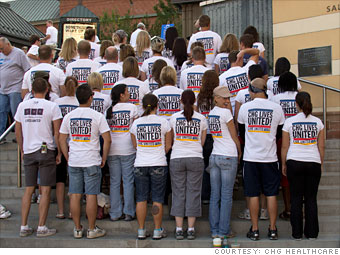
Employees of this medical staffing firm compete in talent shows, trivia contests, and activities like a Dress As Your Favorite President competition. Extra paid time off is given to sales teams that meet their goals. New this year: two on-site health centers.
Headquarters:
Salt Lake City, UT
Website: www.chghealthcare.com

The Boston Consulting Group
The Boston Consulting Group 
Rank: 4
Previous rank: 2
2011 revenue ($ millions): $3,550
What makes it so great?
The elite management consulting firm maintains work-life balance by issuing a "red zone report" to flag when individuals are working too many long weeks. New consultants can delay their start date by six months and receive $10,000 to volunteer at a nonprofit.

Headquarters:
Boston, MA
Website: www.bcg.com

Wegmans Food Markets
 
Rank: 5
Previous rank: 4
2011 revenue ($ millions): $6,335
What makes it so great?
Turnover is an exceptionally low 3.6% at the Northeastern grocery chain, which lets employees reward one another with gift cards for good service. Many workers like it there so much they bring in relatives—one in five employees are related.

Headquarters:
Rochester, NY
Website: www.wegmans.com

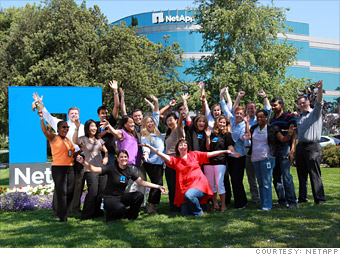
NetAppNetApp
 
Rank: 6
Previous rank: 6
2011 revenue ($ millions): $6,233
What makes it so great?
Employees at the data storage company often get a chance to receive special recognition. Vice chairman Tom Mendoza asks managers to notify him when they "catch someone doing something right," and then calls 10 to 20 employees every day to thank them.

Hilcorp Energy CompanyHeadquarters:
Sunnyvale, CA
Website: www.netapp.com

Hilcorp Energy Company
 
Rank: 7
Previous rank: N.A.
2011 revenue ($ millions): N.A.
What makes it so great?
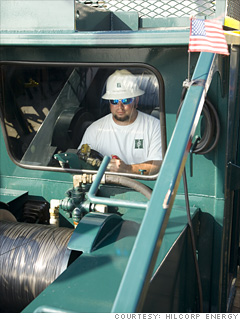
This oil and gas driller, a newcomer to the list, promised staff in 2010 that if the company doubles its production rate and reserves by 2015, every employee will get a check for $100,000. An earlier, met goal rewarded 400 employees with $50,000 toward a new car.

Headquarters:
Houston, TX
Website: www.hilcorp.com

Edward Jones
 
Rank: 8
Previous rank: 5
2011 revenue ($ millions): $4,577
Edward Jones

What makes it so great?
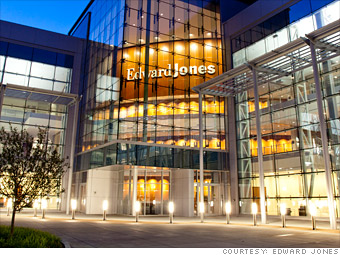
The privately held securities firm maintains some 11,000 small offices and a close-knit culture with regular regional gatherings for ice skating, fishing tournaments, and more. Forty-four percent of new hires come from employee referrals.

Headquarters:
St. Louis, MO
Website: www.edwardjones.com

Ultimate Software
 
Ultimate Software
Rank: 9
Previous rank: 25
2011 revenue ($ millions): $269
What makes it so great?
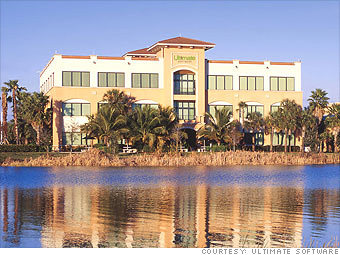
The developer of people-management software—customers include Google, Quicken Loans, and the New York Yankees—covers 100% of health care premiums for employees and dependents and treats workers to a free vacation every two years.

Headquarters:
Weston, FL
Website: www.ultimatesoftware.com/

Camden Property Trust
 
 
Rank: 10
Previous rank: 7
2011 revenue ($ millions): $655

Camden Property TrustWhat makes it so great?
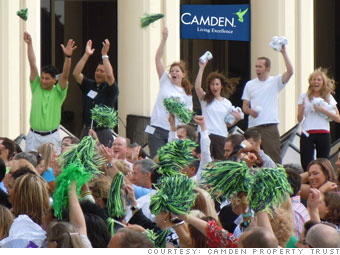
Good times are built into the business at apartment-manager Camden, whose founders are known for practical jokes and impersonations. Other benefits include discounted rentals for employees and a 401(k) that matches at least 50% for up to 7% of pay.

Headquarters:
Houston, TX
Website: www.camdenliving.com


Original source: cnnmoney
9:19 AM | 0 comments | Read More
Biggest Franchise Trends for 2013

Written By Bejata Todd on Thursday, January 17, 2013 | 1:24 PM

Franchising has changed dramatically over the last five years. There are more multi-unit and area developers, more high-tech ways to optimize sales and leaner and meaner corporations honed by the recession. At the same time, franchising remains subject to the challenges it has always faced: the fads, the bubbles and the whims of public taste. We can't say for sure how the next year in franchising will shake out, but here are our picks for the trends that will have the biggest impact.

Area Bombardment
When the economy headed south, franchisors did, too--and east and west and north. A soft franchising market in the U.S. sent many franchisors overseas, and the lesson they learned is that area development is the way to go. Instead of searching out dozens or even hundreds of mom-and-pop franchisees, many American concepts are partnering with a deep-pocketed overseas developer who can navigate the culture and open and operate numerous units at once.

It's a lesson many franchisors have brought home, and after several years of increasing growth, area development is settling in as the new normal. According to research firm Frandata, more than 50 percent of franchises are held by multiple-unit owners, and many of them act as area developers, building out entire metro areas, counties or even states.

"Franchisors are realizing the advantage of dealing with area developers," says Bret Lowell, a partner at the Reston, Va., office of business law firm DLA Piper and author of Multiple-Unit Franchising: The Key to Rapid System Growth. "When they open their second, third and fourth units, the franchisor doesn't have to go through the sales process and doesn't have to deal with six people opening six different units. There are economies of scale and added efficiency with area developers."

Other economic factors have also driven area development in franchising. Banks are more likely to lend to franchisees with successful track records, and franchisors reduce risk by letting proven operators open stores, rather than rolling the dice with a newbie. Lowell believes that even as lending continues to unfreeze and the economy improves, franchises will still favor area developers and multi-unit operators. "I think the economy and efficiencies will cause it to remain," he says. "My sense is, franchisors like to have that multiple-unit arrow in their quiver. In many cases, it's a good option."

Mark Siebert, CEO of Homewood, Ill.-based franchise developer iFranchise Group, also sees a rosy future for area developers. "There is still a lot of real estate available, and landlords are still aggressive on pricing," he says. "Franchisors targeting area developers are going to continue to do well in this economy."

Refranchising Rambles On
Refranchising--in which a company sells its corporate-owned stores to franchisees--is often taken by the marketplace as a sign that a business is in distress. But if that's the case, then franchising must be in a free fall. 

In recent years, Arby's began divesting itself of corporate units, while Burger King, Pizza Hut, KFC, ampm and dozens of other high-profile franchises launched refranchising efforts. In the last year, Taco Bell announced plans to refranchise 400 units.

Kevin Burke--managing partner of Los Angeles-based Trinity Capital Management, which has financed billions of dollars in refranchising deals over the last two decades--says the trend should be interpreted not as weakness but as vitality. "In the beginning, a lot of refranchising was about franchisors trying to pay down debt, but now it's a strategic move," he explains. "A franchisor's skill set is very different from the disciplines needed for a franchisee to run store operations. They want to have a lineup of executives who are well-versed in policing brand standards, working on products and promotions and overall strategy. They don't need to be running the stores themselves. From a strategic point of view, companies are saying, ‘We want to stick to our knitting and what we're good at.'"

There are economic incentives for getting out of running company stores as well. Collecting royalties is much easier than actually selling mufflers or sandwiches, and securities analysts are more enthusiastic about royalty streams than store revenue. At the same time, as units begin to age, franchisors question the logic of investing $500,000 or $1 million in a remodeling effort when they can sell the location off to a franchisee who will foot the bill and still pay royalties for the next decade. "A lot of things can go wrong between sales and the bottom line," Burke says. "Franchisors have realized that collecting royalties is the purest play."

Fast Food Gets Healthy (Really)
Remember the McLean burger? The Burger King Baguette? The Frescata sandwiches from Wendy's? The fast-food road is littered with failed bids to get Americans to eat healthfully from the drive-thru window.
It once seemed like an exercise in futility, but after throwing slimmed-down burgers and other dietary monstrosities at the wall for the last two decades, franchises are finally creating healthful fast food that sticks. 

Case in point: The introduction of a low-cal turkey burger last year at sibling chains Hardee's and Carl's Jr. may have been one of the franchise's most popular product launches ever. Meanwhile, Burger King's Garden Fresh salads and chicken wraps spearheaded that company's largest menu expansion. At McDonald's, consumers seem stuck on oatmeal, and the chain has slimmed down its Happy Meal, as well as added calorie counts to its drive-thru menu boards--a move now required, per healthcare legislation, of restaurant chains with 20 or more outlets.

So have the fast-food chains finally gotten the menu right, or have Americans finally awakened to their button-popping waistlines? According to Darren Tristano, executive vice president of the Chicago-based restaurant research firm Technomic, the answer is a little of both. "Yes, they've found appealing flavors," he says, "but consumers are also interested in taking control of their diets."

It also seems that the big franchises are interested in getting ahead of concepts like Energy Kitchen and Evos, which are luring health-conscious consumers with bison burgers and air-baked French fries. Even fast-casual burrito and burger joints are often seen as smarter choices than the traditional fast-food options. But the big guys seem most concerned about LYFE Kitchen, a Palo-Alto, Calif.-based concept run by former McDonald's bigwigs, which is recruiting franchisees and reportedly may build up to 250 units over the next five years.

Digital Aids
For most of its existence, franchising has been a strange combination of intuition and research. Franchisors have to know instinctively which candidates will do well in their system, and they use traffic patterns and local income levels to choose real estate--though in the end it's been primarily a gut decision. But more and more are seeing the advantages of digital-age data collecting, and services that aid franchisors in site selection, franchisee selection and customer retention are becoming must-haves.

Site Analytics and other services, which use hard data and detailed traffic patterns to help franchisors decide where to place their stores, were used by just a handful of franchises a few years ago. Today companies are clamoring for these services. Google and Facebook recently launched features designed specifically to help franchisors and franchisees collaborate on social media branding and promotions, both of which will see wider adaption in the coming year.

Even something as simple as digital menu boards, which franchises resisted for the better part of a decade, will see wide deployment as companies realize the opportunities they present, such as the ability to add happy-hour offerings, hold one-day promotions or disseminate personalized messaging. Meanwhile, the 
 Franchise Business Index (launched by the International Franchise Association) is tracking monthly growth of the sector and providing insights into the direction it's headed--a strong symbol of how far and how quickly franchising has moved into the information age.

Bursting Bubbles?
How much is too much? For certain franchising food trends that have proliferated at a rapid rate--and will likely continue to do so in the coming year--the saturation point may be approaching.

Frozen-yogurt franchises like Red Mango, Pinkberry, Menchie's, Yogurtland, 16 Handles and dozens of regional players are almost as thick as Starbucks--but without the caffeine-addicted customers and with limited winter appeal. Because they're cheap to open, frozen-yogurt franchises are multiplying like locusts.

"The problem with frozen yogurt is that it's location-driven and largely undifferentiated," says iFranchise Group's Siebert. "It has low barriers to entry and a lot of players. I'm not sure if it has totally run its course, but we're rapidly coming to the point where winners will be sorted out from losers."

James Sinclair--founder of OnSite Consulting, a Los Angeles-based hospitality consultancy that analyzes the restaurant industry--says he and his colleagues have determined that a fro-yo store can be opened for about $20,000. "Granted, it would be a horrible store," he admits. "The point is, I think we're reaching the down-slide of the cycle. It's been just as much driven by property owners. These stores open quickly and don't take any significant modifications, so landlords have encouraged these places to open in the down economy. Everywhere you go you see three yogurt stores on any given corner. And there've been tremendous closures."

Another franchising craze, quick-serve "better burgers," also seems close to saturation. Five Guys opened more than 1,000 franchises in less than five years; other companies in the category include Smashburger, The Counter and BurgerFi.

"I think the whole burger concept is reflective of the marketplace and the fact that people were craving somewhere in the middle," Sinclair says. "They don't want to have a long, drawn-out meal with table service, but they don't want a cheap environment, either. That's what sprouted this whole burger thing."

"The American appetite for burgers seems almost endless," says Technomic's Tristano, pointing out that so-called better burgers aren't necessarily cannibalizing sales from fast-food joints, but are going head-to-head with fast-casual concepts like Chipotle and Noodles & Company, a market segment in which there seems to be plenty of room for growth. Still, the CEOs of better-burger franchises are getting nervous about market saturation, with almost all of them giving recent interviews explaining why their concept will survive the coming "shakeout."

http://www.entrepreneur.com/article/225491#
1:24 PM | 0 comments | Read More