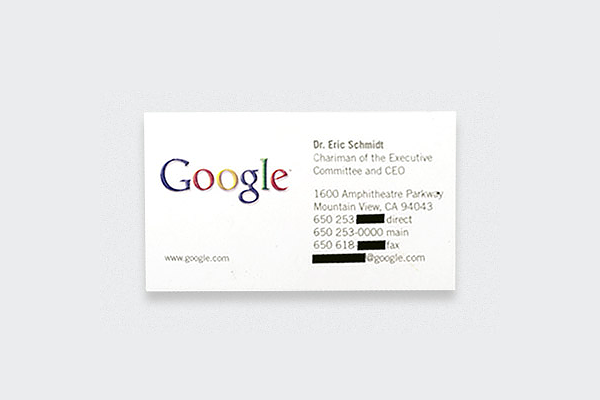
Chairman and former CEO of Google Eric Schmidt recently travelled to North
Korea on a fact-finding mission of sorts. Schmidt wanted to ascertain how North
Korea utilizes the Internet and see for himself just how restrictive it is. The
information he shared was startling, but interesting. A country as large and
powerful as North Korea is far behind many of its peers, and that could be
troubling.
But why go to a communist country? Travel to North Korea is difficult at
best, so why take the chance? We also have to wonder why Google cares about how
North Korea uses the Internet. Sure, the company is a tech giant and search
magnate, but North Korea represents such a small fraction of potential world
online traffic. As much as we can learn from what Schmidt reported back, we can
also infer that North Korea is indicative of a larger problem for Google.
Why North Korea?
As much as I’d love to leave politics out of this discussion, it’s not
possible to do so with a communist nation in reference to openly sharing
information. Although called the “Democratic People’s Republic of North Korea,”
or DPRK, it’s anything but democratic. Communism is restrictive by nature, and
that includes information. With the passing of Kim Jong Il and the rise to power
of his son Kim Jong Un, a few problems were exposed. North Korea is a severely
depressed nation, and its people face a variety of serious problems daily. While
using the Internet for information is probably a distant afterthought for many
citizens, it’s a concern for a company like Google. In North Korea, you have a
very good example of a larger problem for Google.
It’s important to mention that Schmidt didn’t travel alone. Former Governor
of New Mexico Bill Richardson was his guide and he travelled in a delegation
alongside eight other members.
A former UN ambassador, Richardson was in North Korea on a humanitarian
mission in response to North Korea’s launching of long range missiles late last
year. The White House referred to that trip as “ unsuccessful,” unfortunately.
It’s also worth note that Richardson no longer enjoys any official political
capacity, so this was a private trip.
A rock star
Richardson described Schmidt’s reception as that of a “rock star”, which
sheds a little light on just how important this issue of an open Internet really
is. Sure it’s
just the Internet, but it represents so much more than
that. Right now in North Korea, the Internet is only available to a select few:
the government, the military and universities. That’s representative of an
intranet, which is basically what its technology is. Schmidt notes that
there is a “supervised” Internet, which means “that people were not able to use
the Internet without someone else watching them”.
Schmidt also found that, despite the walled-off
nature of technology in North Korea, it would be very simple for the country to
“turn the Internet on”, as he puts it. From his
Google+ page, Schmidt writes:
There is a 3G network that is a joint venture with an Egyptian company
called Orascom. It is a 2100 Megahertz SMS-based technology network, that does
not, for example, allow users to have a data connection and use smart phones. It
would be very easy for them to turn the Internet on for this 3G network.
Estimates are that are about a million and a half phones in the DPRK with some
growth planned in the near future.
Dollars and sense
For Google, North Korea represents a roadblock for something that is very
important to the company: the free and open Internet. Whether or not you’re
familiar with the recent issues surrounding this cause, it’s worth understanding
that Google is fervently behind the issue. Mostly because it’s the right thing
to, but also because its business model is based on it. We visit Google.com,
then enter what we want to know about in the search bar. The results pop up and
so do some unobtrusively placed ads. We click on the ads, and Google makes
money.
In entering a new frontier of search and services, Google is committed to
being a mobile-conscious company.
The desktop will always be there, but the
world is increasingly mobile. A system like that of North Korea, which operates
in such a limited space, concerns Google. How will it drive revenue from a
restricted
system?
More importantly, will this catch on anywhere else?
With such a large number of North Koreans unable to access the Internet
freely, there is little reason to have devices to access it. An open flow of
information is the linchpin to just about everything Google does from selling
devices to creating services. If I can’t access the Internet, what good is a
device that has such features?
Was the visit worth it?
Educationally, yes. Schmidt learned quite a bit, it seems, about how North
Korea operates in regard to treatment of technology. Obviously driving revenue
is a concern for Google, but the issue is deeper that that.
This is ultimately
about the transfer and open sharing of information. Eric Schmidt may represent
the largest search (and arguably the largest tech) company on earth, but I’ll
not believe his trip was strictly business. To really understand the situation,
it was important for him to see first-hand just what was going on. Schmidt
himself said the North Koreans “listened and asked questions,” so they are at
least
open to being open. The focus is a free and open Internet, and
North Korea simply doesn’t have it right now.
Why should we care?
In discussing this issue, we’re remiss to place too much emphasis on the
sensational facts: North Korea and communism. They are worth consideration,
because in essence communism is the heart of the matter. While I don’t subscribe
to a communist mindset, I respect those that do and their belief in that system.
For free transfer of information, however, old-line communism simply doesn’t
work.
North Korea, like just about any nation on earth, is filled with very bright
people doing important work. The open transfer of information can only help the
world community. Being able to openly discuss things such as medical research
will drive both sides of the equation. Perhaps there is a botanist in North
Korea that can analyze cancer research from Scotland, then identify some rare
plant to help reduce its spread. While that may be a made-for-TV scenario, it’s
also worth exploring.
The definition of “www” is World Wide Web. Without a free and open Internet
for all, that simply isn’t true. North Korea is indicative of a problem, sure,
but not
the problem. North Korea confounds us because it’s a fairly
advanced nation that has left an important factor behind: information, We may
openly question why it does this, as it seems obtuse, but there is something we
should all keep in mind when considering why North Korea resists the sharing of
information.
Communism
I live in a democratic nation, as most people do. In the world outside of
North Korea, quite a bit of anti-communist opinion and rhetoric is shared. We
must respect that North Korea is a communist country, and for them, reducing the
flow of anti-communist talk is impossible. This is why it eliminates the open
flow of information altogether. We may or may not agree on its politics, but
let’s try to appreciate and respect its belief system.
An open Internet could create panic in North Korea, and that’s not something
it needs right now. North Korea is a country faced with widespread famine,
poverty, among other various economical and human rights issues. The last thing
it can really afford is dissension amongst citizens. Communism has the capacity
to change, especially with a shift in power to Kim Jong Un, so we can hope for
the people of North Korea that a renaissance of sorts is on the horizon.
Controlling the chaos
Change is never easy. To achieve the goal of a truly free and open Internet,
some type of change must occur.
North Korea, for its own reasons we only partly
understand, chooses to limit or exclude information to its people. In Eric
Schmidt visiting the country, it’s fair to say that excluding or otherwise
leaving North Korea behind is in nobody’s best interest. Such a rich culture
with a lot of potential for positive change should be welcome to join the fight
for the open exchange of information, and they are.
A free and open Internet should be for everyone who wants it, not everyone
who is allowed to access it. In considering an open exchange of information,
North Korea will have to ponder a new way of communism as well. If the current
political environment doesn’t lend itself to freely sharing information, what
will? Can North Korea adopt a communist country in which information is
available at-will? I believe so. Belief is at the core of every great concept,
and North Korea simply has to believe it can forge a new path.
The remains of the day
The Chairman and former CEO of one of the largest companies ever visiting a
communist country in this day and age is monumental. He didn’t stay long, or
necessarily achieve anything, but the lessons were invaluable.
A body of
information that shows opportunity is there, but not being realized. Google’s
ever-present mantra is “don’t be evil,” so we can safely assume this visit had
only the purest of aspirations. Google has never hidden its intentions in
generating revenue, nor does it make it the driving force of its dealings. Doing
the right thing will bring the money eventually, and it understands that.
While the trip was important and poignant, it could
have been for naught. Schmidt’s daughter and travelling companion, Sophie, has a
Google Sites blog detailing the trip. It sheds a different
light on the trip than Eric’s carefully measured feedback, and suggests at a
dog-and-pony show orchestrated by North Korea. If what she saw was truly staged
rather than carefully measured presentation, it doesn’t bode well for the people
of
North Korea in having access to information any time soon.
The concept of a free and open Internet is a strict juxtaposition to the core
concepts of communism. Like any concept, idea, or belief, communism is adaptable
to change. The world has evolved in a way few people thought it could over the
past decade or so. We have more knowledge at our fingertips than we ever thought
we would, and a truly global community. If North Korea would include itself as
we all hope it will, it would be a beacon for change and a signal of hope. Eric
Schmidt opened the door, so let’s hope North Korea sees fit to come outside. The
playground is open.\
by Nate
Swanner
http://www.androidauthority.com/why-eric-schmidt-north-korea-148851/