Written By Bejata Todd on Thursday, March 28, 2013 | 4:20 PM
It can be difficult to evaluate the current economic standing in the United States, as sensationalist reporting often creates a distorted view of the nation's finances. Despite this, it appears as though the U.S. economy is finally embarking on an upward curve, with property prices soaring by 7.4% and unemployment remaining at 7.8% throughout December 2012.
The signing of the fiscal cliff deal seems to have played a pivotal role in reinforcing the nation's tentative growth, which was reflected by a surge in investor confidence at the turn of the year. In total, investors in U.S.-based funds committed $7.53 billion into stock mutual funds, and this represented the highest volume of capital since 2001. All things considered, the fiscal portents for 2013 appear to be far brighter than they were just six months ago.
Investing in 2013: Where to Commit Your Capital While the U.S. is experiencing a sustained growth period, however, the global economy remains mired in instability and uncertainty. Take the ongoing fiscal crisis in the eurozone, for example, which despite showing signs of stabilizing remains a viable threat to long-term economic prosperity. This volatility provides an interesting challenge to investors in 2013, who must navigate both the economic tumult and financial market intricacies if their portfolios are to deliver returns.
The first thing to remember is that this uncertainty can be positive for some investors, especially those looking to trade in equities and shares. As a basic principle, macroeconomic instability is known to trigger diminishing stock prices, which subsequently offer tremendous value as long-term investment vehicles. As long as the eurozone crisis continues to rage, investors with a long-term outlook can purchase plummeting, blue chip shares that will regain their value while the global economy recovers throughout 2013 and beyond.
Another key investment trend in 2013 involves the substantial growth of emerging Asian economies presenting new and exciting opportunities for profitability. Nations such as China and Japan provide a relevant case in point, as, despite mixed economic portents, their markets have benefited from record low valuations. In addition, both nations boast high rates of productivity and burgeoning stability, which again make them ideal for investors who are seeking long-term gains.
Investing in Precious Metal and Property: The Importance of Tangible Assets Another investment option compatible with economic turbulence is gold, as its inherent value provides security during times of austerity. It is therefore expected to enjoy a prosperous 2013, on the back of a 12-year upward price trend that has seen its value soar from $250 to $1,700 per troy ounce. While analysts are predicting that the value of gold will peak during the next 12 months and then begin to fall in line with an improving global economy, this market currently presents a sound and profitable investment option.
While silver is still referred to as the poor man's gold within investment circles, there is a definite sense that this is set to change in 2013. Although critics often deride a material that has been used primarily as an industrial metal during the last decade, it is hard to ignore the fact that it has experienced a 600% price rise since 2003, while also beginning to earn a greater reputation as a precious metal and source of wealth. With some forecasts suggesting that the price per troy ounce could soar to $60 by the end of 2014, the next 12 months provide an ideal opportunity to claim a faction of this thriving market.
In terms of tangible assets, property may also provide a profitable investment opportunity in 2013. Housing markets throughout the world made a sustained recovery during the last six months of 2012, with the U.S. in particular benefiting from a 7.4% increase in property prices within this period. With this growth predicted to continue for the duration of 2013, those who are interested in investing in property may need to act quickly before they are priced out of the market and activity begins to dwindle.
The Bottom Line This diversity of investment options and their potential reflects an improving economy, which has continued to build momentum during the last three financial quarters. With emerging economies continuing to develop alongside their more established contemporaries, there are now a wider range of markets and financial instruments that can deliver sizable, long-term returns. The key for individuals is to determine which suits them best, in terms of their disposable income levels, strategy and wider investment philosophy.
Written By Bejata Todd on Wednesday, January 30, 2013 | 4:50 PM
Robert Dobyns said there is space for up to 200 people on his crowdfunding cruise, which costs between $950 and $1,095
You don't often hear "crowdfunding" and "cruise ship" used together in a sentence. But Robert Dobyns is now in the process of planning what may be the first ever crowdfunding cruise, set to depart on a Carnival Cruise ship from Galveston, Texas, in September.
When I first heard about the voyage, I was skeptical—the whole point
of crowdfunding, in which ventures raise money from groups of
individuals, is that you can do it wherever, whenever—and usually via
the Internet.
However, Dobyns, who is the Houston-based CEO of four different
crowdfunding platforms, explained that the cruise is more of a gathering
of crowdfunding experts. They include lawyers, angel investors,
accountants and venture capitalists. There may be a few people who are
interested in funding their new companies, such as new apps or film
companies, on a crowdfunding platform, but many of the people who will be on board will come to learn more about the industry as a whole.
The four-night cruise will include both speaking engagements and activities at the cruise’s destination in Cozumel.
Dobyns scheduled the cruise for September because it is after the
U.S. Securities and Exchange Commission is expected to make a ruling
about the legality of equity-based crowdfunding—therefore, experts will be able to discuss it.
Overall, Dobyns hopes the cruise will attract many industry experts
and will lead to more knowledge about the industry as a whole.
"There are a lot of events for crowdfunding, but I thought, 'You know
what, I always enjoyed cruises'," Dobyns said. "This allows people to
have a 'workation'."
My principal concern leaving New York City was the strength of the Utah startup ecosystem. Now that I’m here, I’m afraid that I’ll be unable to maintain my NYC network and struggle to cultivate a new one.
The other week I expressed my concern to a former Bain colleague, who now works at LucidChart, a venture-backed startup in Utah. He invited me to last night’s Startup Grind meetup, held at Adobe’s ostentatious new building.
As it turns out, Qualtrics CEO Ryan Smith was the night’s interviewee. He told the story of the company’s “10-year, overnight success.” I tweeted out some of my favorite quotes, including:
Where you start is never where you end up. The key is innovating along the way.
What’s wrong with making money quietly?
Execution is an amazing barrier to entry. So is hard work.
There are a couple of things that really matter and the rest is noise.
The sooner you realize who you are, the easier life becomes.
I’m very aware of what has lined up. What we’re trying to do is big.
The first quote personally resonates with me. I’ve learned that life is not linear. Our path unfolds, and we can accept or resist it. Life will take us somewhere we never expected if we let it. But, we risk appearing hypocritical when we choose to be open to those possibilities.
For years, Ryan wasn’t interested in taking an outside investment. Then, he was. It was the right next step for Qualtrics.
I vowed I’d never move back to Utah. And yet, here I am. It’s the right next step for me.
Hearing his story from the beginning was inspiring. And guess what? It didn’t happen in Silicon Valley (or NYC).
The Internet juggernaut takes the Best Companies crown for the fourth time, and not just for the 100,000 hours of subsidized massages it doled out in 2012. New this year are three wellness centers and a seven-acre sports complex, which includes a roller hockey rink; courts for basketball, bocce, and shuffle ball; and horseshoe pits.
With two artists in residence on staff, the perk-friendly, privately held data analytics firm takes creativity seriously. One employee cites SAS's "creative anarchy" as conducive to innovation. New this year: an organic farm for SAS's four cafeterias.
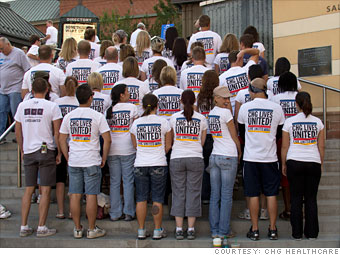
What makes it so great? Employees of this medical staffing firm compete in talent shows, trivia contests, and activities like a Dress As Your Favorite President competition. Extra paid time off is given to sales teams that meet their goals. New this year: two on-site health centers.
What makes it so great? The elite management consulting firm maintains work-life balance by issuing a "red zone report" to flag when individuals are working too many long weeks. New consultants can delay their start date by six months and receive $10,000 to volunteer at a nonprofit.
What makes it so great? Turnover is an exceptionally low 3.6% at the Northeastern grocery chain, which lets employees reward one another with gift cards for good service. Many workers like it there so much they bring in relatives—one in five employees are related.
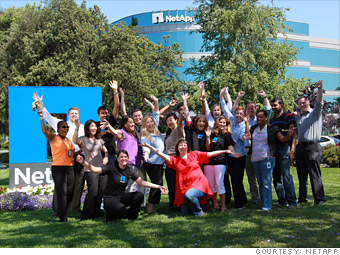
What makes it so great? Employees at the data storage company often get a chance to receive special recognition. Vice chairman Tom Mendoza asks managers to notify him when they "catch someone doing something right," and then calls 10 to 20 employees every day to thank them.
What makes it so great? This oil and gas driller, a newcomer to the list, promised staff in 2010 that if the company doubles its production rate and reserves by 2015, every employee will get a check for $100,000. An earlier, met goal rewarded 400 employees with $50,000 toward a new car.
What makes it so great? The privately held securities firm maintains some 11,000 small offices and a close-knit culture with regular regional gatherings for ice skating, fishing tournaments, and more. Forty-four percent of new hires come from employee referrals.
What makes it so great? The developer of people-management software—customers include Google, Quicken Loans, and the New York Yankees—covers 100% of health care premiums for employees and dependents and treats workers to a free vacation every two years.
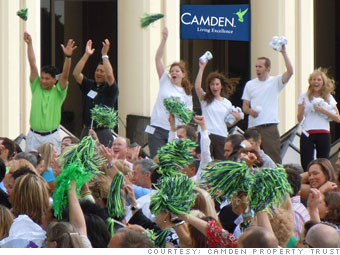
What makes it so great? Good times are built into the business at apartment-manager Camden, whose founders are known for practical jokes and impersonations. Other benefits include discounted rentals for employees and a 401(k) that matches at least 50% for up to 7% of pay.
Written By Bejata Todd on Thursday, January 10, 2013 | 12:57 PM
We received some unusually negative feedback regarding our choice of Snap-on Tools as the top franchise system on this list. Please view our response to this criticism and a further explanation of our methodologyhere.
Not getting paid what you’re worth (or not getting paid at all) and want to start your own gig? For those who don’t have the patience, capital or guts to generate sales from scratch, franchising can make a lot of sense—though not all brands deliver the same return on investment.
With the help of Robert Bond, chief executive of theWorld Franchising Network(a franchise database) and publisher ofBond’s Franchise Guide, we waded through data on 110 of the most established names to find 20 that competent operators should consider.
The methodology is based on five variables: average initial investment (franchise fees plus equipment costs); total locations (the more the better); closure rate (the number of closings in the last three reported fiscal years divided by the total number of existing locations); growth in the number of U.S. outlets in the last three years; and the number of training hours as a percentage of startup cost (the more support from the home office, the better). Overall footprint and survival rates carried the most weight. We did not include royalties paid to franchisors because they ranged in a tight band and thus barely affected the overall rankings.
All of this information can be found in each company’s 400-page franchise disclosure document—required reading before any new franchisee takes the plunge.
Here are the top 10. For a full list of 20,click here.
1. Snap-on
Kenosha, Wis.
These stores-on-wheels sell tools to professional mechanics. Each Snap-on truck comes equipped with a computer, wireless Internet access and a DVD player for product demonstrations.
Average initial investment: $135,390 U.S. locations as of 1/1/11: 3,392 Closures (last three fiscal years): 0 Hours of Training: 191
The 24-hour home of the Slurpee is the largest franchisor (by outlets) in the world. U.S. military veterans get a 10% discount on the initial franchise fee.
Average initial investment: $393,800 U.S. locations as of 12/31/10: 6,142 Closures (last three fiscal years): 90 Hours of training offered: 304
Opened in 1955, this chain sells and leases furniture, televisions and household appliances. It offers a $450,000 line of credit to buy inventory—more if business is brisk.
Average initial investment: $420,725 U.S. locations as of 12/31/10: 1,749 Closures (last three fiscal years): 12 Hours of Training Offered: 701
This fast-casual chain sells homemade bread and made-to-order sandwiches and salads. Three Panera Cares cafes function as charities, accepting donations and offering free food to hungry patrons.
Average initial investment: $1,447,770 U.S. locations as of 12/28/10: 1,379 Closures (last three fiscal years): 6 Hours of training offered: 1,129
5. Servpro
Gallatin, Tenn.
Started in 1967 and now in 48 states, this chain cleans buildings and homes after fires, floods or other natural disasters hit, including the September 11 terrorist attacks and Hurricane Katrina. It marshals “elite large-loss specialists” to handle universities, municipalities and the Pentagon.
Average initial investment: $156,250 U.S. locations as of 12/31/10: 1,571 Closures (last three fiscal years): 22 Hours of training: 226
6. McDonald’s
Oak Brook, Ill.
After recent makeovers, most locations now boast Wi-Fi access, hanging lights and contemporary art. The chain is one of 11 companies with exclusive marketing rights in its category during the 2012 Olympics.
Average initial investment: $1,480,625 U.S. Locations as of 12/31/10: 14,016 Closures (last three fiscal years): 367 Hours of training offered: 840
The tax-prep chain takes to the streets with employees who dress up like the Statue of Liberty and wave logoed signs. Each year, for a week in January, Liberty offers free nationwide classes on tax preparation.
Average initial investment: $63,350 U.S. locations as of 4/30/11: 3,592 Closures (last three fiscal years): 337 Hours of Training Offered: 31
This unit of ServiceMaster provides home and window-cleaning services (and a wealth of free cleaning tips on its website). It runs a closed intranet where franchisees can share experiences and get advice.
Average initial investment: $66,600 U.S. locations as of 12/31/10: 943 Closures (last three fiscal years): 17 Hours of Training Offered: 58.5
9. The Maids International
Omaha, Neb.
This home cleaner is in every state except Pennsylvania. The average revenue for franchisees in business at least four years is $959,000; each location starts with at least six employees, plus the owner.
Average initial investment: $106,420 U.S. locations as of 9/30/10: 1,053 Closures (last three fiscal years): 38 Hours of Training Offered: 210
10. Jimmy John’s
Champaign, Ill.
Jimmy John Liautaud founded this dine-in sandwich shop in 1983 at age 19. New franchisees don’t have access
to financing, but they do get help setting up their operations. The final step, warns the company website: “Work harder than you ever have in your life.”
Average initial investment: $395,500 U.S. locations as of 12/31/10: 1,130 Closures (last three fiscal years): 23 Hours of Training Offered: 172
Written By Bejata Todd on Tuesday, December 25, 2012 | 1:21 PM
This is a guest post by Chris Campbell, founder and CEO of Review Trackers.
Entering into a business partnership is like getting married. Ending one is a lot like getting divorced.
We said goodbye one cold day in January of 2011. Or he said goodbye, in the stairway leading up to our office on North Clark Street in Chicago. My business partner of three years, our creative director, and a person I considered the most critical part of the team told me he was done building our company.
I say “done building the company” but it felt more like “done with our baby”. Our baby was a digital marketing agency: fledgling and often frustrating. I admit that it was kind of an ugly baby—most months it was tough to make payroll, even though we were working our butts off to make the thing work—but this wasn’t even on my mind while I stared, shocked, at the gray carpet of the landing.
What was on my mind? Like most entrepreneurs, I saw the glass as half-full. I had tunnel vision, with little sense of what was happening on the periphery. At the time, I had no idea that our venture wasn’t working.
That it was going nowhere. That—and this is most important of all—my business partner was deeply unhappy. All I knew was that without him our company wouldn’t be the same.
To say I was heartbroken would be an understatement. At the same time, the experience taught me hard lessons that come with ending a business partnership. Here are the nine that made the deepest impression:
1. Keep an eye on cash flow. This is the lifeblood of any business. In school they talk about the P&L statements, about the importance of always watching your costs. This was never my strength and rarely my focus. My thinking went, “If we just sell more, that will fix all the problems, right?” The answer was no. If you can’t make payroll, it doesn’t matter if you have millions in receivables. I learned this the hard way.
2. Make quick decisions. When my business partner left, he taught me it’s always better to make a decision swiftly. Even though it hurt me deeply, he deserves for the courage he showed that day. Because even though it’s tempting, delaying a decision achieves nothing. Just pull the ripcord and don’t spend any more time over-thinking things. More often than not, you already know what you will decide anyway. I have since applied this to almost everything in my life, choosing one way or the other and committing to it.
This past May, inspired by a session at the 2012 Big Omaha conference, I decided, then and there, to work full-time on my new startup, Review Trackers. Within a few hours I started the fundraising process with a few phone calls to investors, started building a pitch deck, and began preparing for my new life. I could have spent another couple of months dallying over the decision, all the while knowing it’s what I intended to do.
There’s no sense in delaying the inevitable.
3. Get outside your comfort zone. When my partner left the company in 2011, I was due for a wake-up call to get me out of my cushy, stagnant routine. Though I was working hard, I wasn’t really growing as a founder, businessman, or person. I had blinders on, which stopped me from being aware of my surroundings. Oddly enough, my company wasn’t growing much either. This was when I realized the relationship between comfort zone and business success: If you’re stuck doing the same thing over and over, you’re not innovating. And if you don’t innovate, you die.
You need to keep pushing yourself to experience and achieve new things. Same goes for your business, and the two are rarely unrelated.
4. Life is short. Passion is the key ingredient to business success, so be sure to do something that you actually care about and enjoy. If you don’t like doing something, stop. My partner and I lacked this key ingredient in our business, and our reluctance to admit that we both could be in a better place did not help. I have followed this advice since the divorce, and it has helped me increase my income, found a new startup, and travel the world, visiting 30 cities in the past 18 months.
5. Have the awkward conversation. Be direct, honest, and raw. People will either hate you or love you for it. Sure, sometimes being honest can make you feel like a jackass, but I learned that being honest about what you want and what your business needs is worth looking like a jackass, ten-fold. There’s a difference between being nice and being a pushover. My business partner was not a pushover. He had simply had enough, and though he was tactful and diplomatic that day, he did not sugarcoat the truth.
6. Have a back-up plan. When my business partner and I decided to divorce—an event that was entirely unexpected—I scrambled to come up with back-up plans at once. Because our business relied on people instead of systems, my partner had to do a brain dump just to bring closure to all our pending projects. It was not a stress-free time.
The lesson: You never know when disaster will strike. That’s why it’s important to build systems instead of people. Imagine the worst-case scenarios. Do you have backups of your files, your websites, your computer, your ideas and your all-important data? I do now. I don’t even want to find out how messed up I’ll be if I lose my data or access to my computer. I don’t even want to know what it feels like to try and secure everything at the last minute while a hurricane or some other act of God bears down.
7. Being poor sucks. People say that money doesn’t solve problems. Let me tell you that it does. When my business partner and I decided to call it quits, we continued to live together as roommates. Why?
Because we couldn’t afford not to. At that point, I decided to work hard and make smart decisions to make more money. Life is just so much better when you have an income that allows you not only ample food and shelter, but luxuries. Like traveling the world and meeting smart, interesting people. Like sparing yourself the utter awkwardness of living with your former business partner.
8. Focus. When I was in college I had the shiny-toy syndrome. I jumped from topic to topic, idea to idea. The symptoms of this syndrome carried over to our work environment, and they weren’t conducive to business. The ability to realize what is important—to recognize what really needs to get done—is critical to success.
Becky Davenport, a mentor who worked with me for several years as I built my first startup, used to say to me every meeting, “Focus, Focus, Focus.” For years I didn’t fully understand what she meant by this. Now, after the divorce, I do. Focusing has helped me achieve efficiency, and efficiency has helped me go from working seven, 12-hour days a week to just 35 to 40 hours.
9. Avoid time suck. I’m not just talking about watching that viral YouTube video or getting lost in Twitter.
I’m talking about the kind of time suck that’s much worse—the kind that seems to be delivering value to your business and your customers, but actually isn’t. Don’t take meetings with people who waste your time. Instead of spending hours trying to get leads, convert the leads that you already have. As a business owner, you’ll get to write your own calendar, but write it in a way that helps you focus on things that matter. You need to sift through your business issues and identify the really important things that need, deserve, and demand your attention.
The ability to network successfully can be one of the greatest assets in business. It allows some people to find incredible opportunities, while others just watch from the sidelines.
Effective networking isn't a result of luck -- it requires hard work and persistence. What does it take to be a super networker? Here are seven of the most important habits to develop:
1. Ask insightful questions.
Before attending networking events, get the names of the people who are expected to attend and search social media sites like LinkedIn to figure out which topics they're probably most interested in. For people who are already in your network, don't assume you know everything they're up to. Find out what they're currently working on -- or perhaps struggling with. This attention to detail can go a long way at your next one-on-one lunch or dinner meeting.
2. Add value.
One of the most powerful networking practices is to provide immediate value to a new connection. This means the moment you identify a way to help someone, take action. If, for instance, you know someone in your network who can help a new connection with a problem, drop what you're doing and introduce the two individuals.
3. Learn their 'story.'
Ask successful entrepreneurs to tell you how they got where they are. Most people think of this as an exercise in rapport building, but hearing these stories can tell you a lot about a person's approach to business. The more you understand your networking partner's mentality, the better you can add and extract value from your relationship.
For example, some entrepreneurs pride themselves on working 16-hour days and doing whatever it takes, while others focus on being strategic and waiting for the right opportunities to open up. These are clues that can not only allow you to see what people value, but also what working with them might be like.
4. Share a memorable fact.
When someone asks, "What do you do?" don't give a canned elevator speech about your company and career. Mention something personal that defines who you really are. Maybe you have a passion for playing an instrument or an obsession with collecting antiques. These are also "things you do," so make it a point to share them. Such personal details can help lighten the mood and get people talking.
5. Keep a list.
What's your routine after attending a networking event or meal? If your answer is, "I go home," you're probably going to miss out on opportunities. Write down important topics that came up at the event. This habit can help prevent opportunities from falling through the cracks and give you something to reference in conversation the next time you meet. You can also develop a reputation as someone who's on top of things.
6. Make small promises and keep them.
No matter how small a promise you make -- such as sending an email or returning a phone call -- delivering on that promise reflects on your character. By following through on your word, you start building a reputation for trustworthiness, which is exactly how every great networker wants to be perceived.
7. Reward your 'power' contacts.
Keep a list of your top five to 10 networking partners and do something each week to add value to one person's life or business. You might send them a book or set up a lunch to introduce them to one of your other contacts. This habit can help you be proactive about staying in touch with your most powerful contacts. Just as with fitness or investing, the most successful people are the ones who choose to be consistent in their actions.
To achieve success, you have to go through an incredible journey of ups and downs. And once you do, you feel humbled. I've realized the beauty of the American Dream is that once you've seen it, you start to think about ways to give back.
I've been fortunate to be part of three successful entrepreneurial journeys. And I've always believed the more you serve and give, the universe always returns the favor. I began my philanthropic journey by starting the BeProud Foundation, built on the premise that through awareness we can prevent future hate crimes in America.
Of course, getting a nonprofit up and running takes a lot of time, effort, and money. It's basically like another startup – except with a different kind of P&L. The greatest reward is the "change" you set out to create, which is more powerful than any financial profit you'll ever make in the business world.
BeProud took three months to launch, and our first public service announcement began airing today, integrated with a call to action on Facebook, my social platform Via.me and YouTube. If you are thinking about starting a foundation one day to give back, here are three things I learned along the way that may help you on your philanthropic journey.
Commitment is the first step. So many people want to do something when a tragedy happens. Given our busy lives, we tend to talk about it and then get preoccupied or distracted. That's why it's important to quickly take the first step and sketch out a plan. This can be the hardest part. It took me three sleepless nights to finally realize the only way something was going to happen was if I made this issue my problem -- and took the first step to do something about it.
Don't be afraid to ask everyone for help. I was shameless. I believed so much in the cause, I emailed everyone I knew from my Rolodex: celebrities, agents, friends, influencers, politicians, press -- everyone. The message had to be concise and offer specific ways they can get involved. In our case, we asked for their support through social media, and encouraged people to share their own reasons to "be proud" by uploading a YouTube video. Deepak Chopra and family members of Nelson Mandela are among the supporters.
Leverage social media – it's free. There are 2 billion people on the Internet today – that's as many as existed in the entire world in 1925. Connect with them. My premise for starting with social media was: If governments can be overthrown by the power of collective information, we can process change in social movements the same way. We started a grassroots effort to encourage volunteers to help spread the message globally. On Facebook alone we have close to 700 members that have joined the "Global Volunteers for BeProud" group. We also created a separate social media presence for BeProud on Facebook and Twitter.
Lastly, remember this: The fact that you're doing something with a greater purpose is a beautiful thing. No one can take that away from you. You're contributing to something greater than yourself. And, that's one of the proudest moments you'll have. I've also learned that life's biggest profit isn't a number; it's what you give back that inspires people. I hope with BeProud my journey is just the beginning.
Freelancers share their best practices for being their own boss, and why you should so totally just do it.
When talking to creative freelancers, there’s one phrase
that’s often repeated: “I don’t mean to sound cheesy or cliché but…”
What follows that "but" ranges from waxing lyrical about the ability to
control the professional and personal work they do, to an appreciation
of work-life balance, to a full-on embrace of occupational joy and
diversity. “It sounds cheesy, but if I’m not having fun, I’m not happy.”
That many freelancers sound like they have to defend their chosen
career path says something about the state of the work world. It’s as if
being satisfied in your work and how you go about it is something to
feel guilty about; like somehow being your own boss is equated with not
having a real job and faffing about in your jammies; as if in order to
do real work you have toil away at a "stable" job with an
office and its attendant politics. But, really, it’s the full-timers who
should be defending the act of working at a desk inside a big office.
Because, as we know, the state of work is changing.
As Fast Company has documented at length in its Generation Flux series, work can’t be defined in the old ways.
The pace of change in business and culture is breakneck, and
predicting what that job at that big company is going to look like next
year, or what creative opportunities are going to present themselves to
you, more difficult. As noted in Generation Flux: "what defines GenFlux
is a mind-set that embraces instability, that tolerates--and even
enjoys--recalibrating careers, business models, and assumptions." It’s a
mind-set that’s shared by people who choose to pursue a self-driven
creative career.
But what advice do successful freelancers give in terms of actually
living and working this way? Mainly: get over it and just do it. While
working independently is not all lollipops and rainbows, what with the
added responsibilities of business finances, the stress of erratic
income, and the unpleasant prospects of hustling for work, freelancers
will tell you that the benefits far outweigh the drawbacks.
We solicited the opinions of nearly a dozen creative freelancers,
from the established to the newly independent, to get the skinny on
being your own boss. They shared candid insights on everything from
building their own personal brand, to the ways in which they choose and
create their work; from the sharing tips on navigating the annoying bits
like finances (spoiler alert: get a great accountant), to the lifestyle
perks that seem to trump the pain of going it alone. Here are their
insights.
Since the purpose of this exploration was to gain insight on how to
be a happy and successful creative freelancer, we surveyed a range of
creative people, including agency writers and art directors, developers,
designers and digital creative directors. Known for a specific
expertise, their freelance work has followed the path they forged while
working full-time. In fact, that’s the biggest piece of advice for those
looking to take the leap: work in your chosen industry for long enough
to establish contacts and gain experience. Then, follow the work you
want.
"I’d say don’t start freelancing until you’ve done at least five years in the business you’re freelancing in,” says Tom Christmann,
a longtime agency executive creative director who struck out on his own
two years ago and balances his time between ad work and creating comic
books, graphic novels and designing games.
Tim Geoghegan
Tim Geoghegan,
also a former agency creative exec and now a global nomad who’s been
known to work from a hut in Bali, agrees: “Build a strong reputation
first. Don’t destroy that reputation while freelancing. Try not to burn
bridges. Know your strengths and weaknesses. They’ll become very clear
and exponentially stronger and weaker while freelancing.”
But experience alone won’t necessarily cut it, says Kerem Suer,
an independent UX/IA designer who started freelancing so he could “work
hard and play harder.” He recommends some serious research before
setting out on your own. “Freelancing is not that fun little side thing
you do, it’s a job and it comes with responsibilities. So a little
market research wouldn’t hurt.”
Being as prepared as possible will help when that panic of the unknown strikes. And it will. But, according to art director Daniel Shapiro,
who initially started freelancing as a way to look for a solid
full-time job he could settle into, “The unknown is what makes it both
challenging and enjoyable. It will be slow at first and it will terrify
you but try and relax and enjoy the time because once you’re busy you
probably will be for a long time.”
Let’s face it, talking about yourself in "brand" terms can be a bit
unsavory. Yet, it’s a necessary evil, particularly when striking out on
your own. Whether creating a corporate entity under which to operate, or
rocking it as a sole proprietor, freelancers need to ensure they’re
consistently in front of prospective clients.
“I always felt weird networking and selling myself, but I’ve found
it’s a necessity,” says Geoghegan. “When I first started in this
business, the rule was ‘let your work speak for itself.' To a point,
it’s still true. But the chances are, even if you think you’re top of
people’s mind, you’re not. You just have to promote yourself and point
to your track record.”
The most important reason to spend some time being fully employed in
your field of choice is to build such a network of friends in hiring
positions so work can come from word of mouth and referrals. Because the
alternatives can be a bit dicey.
“Online freelancing services are a last resort to me for finding
work, mostly because they come across as cut-and-dry projects thrown out
to the masses for the lowest bidder,” offers developer Nick Jonas.
“While I’m sure one can find some great opportunities on sites like
Krop or AuthenticJobs, they are like the E-Harmony of the creative
professional world. I’m more keen on working with someone I’ve
established a sense of trust with, whether it’s a 1st, 2nd or 3rd degree
connection.”
But that doesn’t mean all online networks deserve the same dismissal. New breed services like Working Not Working (with its simple mechanism for letting ad creatives broadcast their availability status), The Supply (which specializes in representing and placing highly specialized digital talent), and The Idealists (a tightly curated community of talent and clients that allows for creative matchmaking), as well as sites like Dribbble and Scoutzie, all provide more connections-based ways for freelancers to find the right work.
While on the topic, don’t even get freelancers, particularly
designers, started on the topic of crowdsourcing.
Quickly hailed as a
new way for clients to tap (exploit?) the power of the masses,
crowdsourcing is generally seen as a scourge by many of those who are
paid for their ideas.
Adam Tompkins
“I don’t, and would never, use a crowdsourcing platform or site,” says Justin Gignac, who, along with fellow art director Adam Tompkins founded the aforementioned Working Not Working and who also made art out of New York garbage. “Creatives should get paid for the work they do and not be throwing work into the mix in hopes of ‘winning’ and getting paid.”
Still, no matter how work is scored, the biggest boost to a
freelancer’s personal brand is the most basic.
“Work hard and be nice,”
says Shapiro. “The more people you work with the more chances you have
to make a positive impression. People who do a good job are talked
about, and so are the people who don’t.”
“Networking is very important, but being a good human is number one.
No one wants to work with an asshole,” offers digital art director Katie
Meza, and Gignac adds: “Don’t be an asshole. It’s not just about being
talented anymore. People will only call back freelancers they actually
want to work with.”
So what does the work life of a freelancer look like? It entirely
depends. Some choose to work in-house at various agencies, taking one
gig at a time, while others insist on working from their own space and
handling multiple projects at a time. No matter the chosen path or
clients, freelancers say be sure set limits on your work--a difficult
thing for creatives accustomed to high-demand work environments.
“I would say one of the biggest challenges with freelancing at an
agency is setting and maintaining limits,” says creative director and
art director Kim Haxton.
“You are getting paid for something that you agreed to in advance, and
of course because of the nature of advertising, something will
inevitably change, you’ll be asked to work longer hours, you’ll be asked
to take on more than was initially explained to you. If you’re not
tough, it’s easy to get taken advantage of.”
The best agencies to work with, she says, are the ones that realize
the situation they are putting you into.
“They take the time to brief
you properly. They give you access to all of the shop’s resources, and
they are realistic with their expectations. That is the best way to set
up a freelancer to succeed.”
The in-house or in-your-own-house question is dependent on both the freelancer’s preference and the client’s needs.
“I won’t work on-site. I’ve lost some opportunities because of this,
but really people want you to be within their sight because they want to
babysit you,” says says front-end developer and creative technologist Mike Bodge,
who started his career as the “first digital guy at JWT." “These are
the clients that suck. I will go in for meetings and reviews and stuff,
but any real work I will do in my own office. I have my setup all
perfect, and the best environment for me to work.”
“Everyone in this business knows the real thinking happens away from
the desk and out of the meeting rooms. The best creative resource
managers understand this," offers Geoghegan. "There’s a very real,
professional way to manage a 'loose’ creative process by using check-ins
and strict deadlines. Then again, face-to-face and spontaneous
interactions are often essential as well. That’s why I like new
workspace situations like Co Collective’s Grind or Wework. I think that’s closer to the future of how we’ll all work.”
If the choice is to work from home, limits need to be set there, as
well. “It’s really important to have a separate office area,” says
Haxton. “You can’t work from your bedroom, or your living room. You have
to be able to feel like you’re not at home. Otherwise, you’ll just get
distracted, and end up vacuuming or something. You really have to
pretend that you are away from home, at work.”
For Christmann, “a comfortable chair, Spotify, Black Sabbath and a
pair of noise-canceling headphones” turns any physical space into the
perfect workspace.
Tom Christmann
That decision, whether to step into an office culture or work
alongside it, can have an impact the level of collaboration on a
project, though most freelancers say they feel a part of whatever
creative process they’re working in (with the occasional comment about
being a hired hand for certain jobs). But for Geoghegan, being slightly
detached has its privileges. “I’ve learned to just let go more. To
present ideas I love, to fight for them of course, but to know when to
let go. It’s like a breath of fresh air when you’re actually paid to…
let go.”
Tompkins agrees: “I value the constant change. I never liked getting
too involved with one client or another. The longer you work on a
project, the more politics you are exposed to. At a certain point, it’s
hard to not get involved and it’s never good for the finished product.
As a freelancer, it’s easier to float above that stuff, seemingly
ignorant to its existence.”
Unlike other professions, being creative for a living is a nuanced
alchemy of working to a creative brief, inspiration, talent, and perhaps
a bit of eye of newt. Which is to say, it’s impossible to define how
exactly to be creative. That said, the freelancers we spoke with have
all devised a custom-fit routine that allows them to work at full
capacity, whether it’s the ability to take a walk outside, as valued by
Haxton, or the ability to work in your unmentionables (“Someone is
paying you to click around on your computer while you’re in your
underwear. Never forget that privilege,” says Bodge.)
“It’s important to have a routine rather than simply work when the
mood strikes--sometimes the mood may never strike and work just won’t
get done,” offers Jonas. “Remaining focused is always challenging, and I
think highly depends on the work environment you put yourself in and
staying healthy and active outside of work. It’s hard to stay focused
in a noisy and distracting work environment, and equally hard with
little sleep and exercise.”
Bodge divides his time up between "concentration days," where he
follows a strict schedule to allow for uninterrupted thought and doesn’t
talk to anyone, and "random stuff days," which involve calls, writing
proposals and client revisions. “I hate these days the most,” he says.
Regardless, he tries not to work past 6p.m. “I don’t believe working
later makes me more productive. If you have to work long hours it’s
because you have unreasonable deadlines or you’re not working
efficiently.”
Christmann says he’s a big believer in quantity over quality when it
comes to idea generating. “I try to get four ideas in the morning and
four in the afternoon. It makes it a game. So after three days, I’ll
have 24 ideas that are all on brief and pretty good. Once I’m in
crafting mode, when I can see an idea becoming real, a great idea is
inspiring.”
It’d be near unfathomable to talk about setting your own work
schedule without meeting a few night owls. Suer is one such, and he
takes this idea to the extreme. “My creative process is not really that
different than when I worked full-time, but timing is almost opposite. I
now work night shifts where there are no email or phone distractions.
But my wife’s schedule is also helping the situation, as she’s a night
shift nurse.”
“I’m more productive at night when there are less distractions and my
brain has slowed down a bit. Between emails and iChat and the Internet
it’s more of a challenge to be efficient during the day,” says Gignac,
adding that for him, motivation and productivity are sometimes at odds.
“I’m motivated by all of the amazing, inspiring and envy inducing things
I see on the Internet all day. Which are the same amazing, inspiring
things that make it so difficult to stay focused during the day.”
And what of that all-important motivation? It seems that when the
choice of work is theirs, freelancers find motivation comes a little
more readily.
“Motivation is easy. I’m always motivated to do a good job, no matter
what I do, because I don’t consider what I do separate from who I am.
It reflects on how I feel about ideas, people, and life itself,” says
digital creative director Sheena Matheiken, who is behind the popular Uniform Project.
“Inspiration, on the other hand, is a tougher beast. It has to be
nurtured, molded, left alone, brought back to life, wrestled with,
caressed, fussed over… all of that and more.”
Tompkins,
who describes himself as a binge and purge freelancer, says success is
his motivator. “Every creative wants to win. If you solve a problem for a
client and it’s your work that gets produced, and that work helps them
(or wins an award for being especially creative), that is success.
Success is the same for everyone. More work, better work, more money,
personal satisfaction and growth. Happy parents that brag about you.
It’s all good.”
There is one very distinct pleasure that freelancers find when they
first establish themselves: the ability to go tech-toy shopping and
write the spree off at tax time.
Says Bodge, “Having a great setup at home was always important to me
even before I was a freelancer but now buying toys is fun because I can
just tell my wife it’s for work and it’s a tax write-off.”
Shock of shocks, the freelance contingent we spoke to are doing their
part to keep Apple stocks nice and high. MacBook pros are the central
nervous system of choice, though whether or not a dual-screen 27” cinema
display is part of the packaged depends largely on the creative focus.
“My Mac Pro with dual 27” screens and Aeron chair is my cockpit and I
see these screens more than I see the back of my own eyelids,” says
developer Bodge. “It’s a seriously pimped out machine that can handle
anything I throw at it. Never be cheap with your computer or chair if
that’s your job.” Some creatives, on the other hand, prefer smaller gear
for those days when working in the garden at MoMA is a must.
Adobe also fares well at the hands of creative freelancers ("I would
have no possible way to make money in this world if it wasn’t for Adobe.
I can’t build anything with my hands, I’m a horrible rapper. Trading
.PSD files for money is the only way I can keep my lights on,” adds
Bodge.)
Other common indispensables include Basecamp for project management, Harvest for time-tracking and invoicing, Wallet for password management, Actionmethod or Evernote
for note keeping, Google apps for remote collaboration, and Spotify or
Rdio for tunes, of course. And calendars, says Suer, who admits that his
super-specific planning has resulted in friends calling him a “schedule
Nazi”.
The love-hate relationship of working as a creative freelancer can be broken down simply: art vs. math.
No surprise, but some creative people don’t much like math; they
prefer creative variety, meeting new people, being stimulated by
environments, a lack of office politics, having ownership of their own
success, free time in between jobs and the ability to work on personal
projects. Things become a drag when billing, IT, accounting, health
insurance and other logistical matters enter the picture.
“There’s a reason we became creatives and not business people, because we’d be terrible business people,” says Gignac.
“There are so many formalities, paperwork, technicalities and math. This is not why I went to art school,” echoes Suer.
But according to our freelancers, it’s worth sucking up as a tradeoff
for the freedom and flexibility of freelancing, though not without a
word of caution: have about six months cash in hand before making the
jump.
“Overextending yourself can have real implications, and not having a
certain amount of liquid cash on hand can mean you miss a deal to invest
in one of your own projects,” cautions Geoghegan, who also recommends
invoicing quickly, clarifying details up front and staying up to date on
COBRA payments.
Freelancers Union is also valued by freelancers when it
comes to insurance.
And then there’s the question of setting your rate. Like the noxious
Honey Boo Boo, freelancers gots to get paid, the difference being, of
course, that creative professionals tend to shy away from the topic.
“Set your rate competitively, with a lot of consideration. Then,
never go down on that rate. Your rate is how you value yourself and that
is how others will value you,” says Geoghegan. “And a day rate might
seem like a lot, but when you factor in taxes, expenses, chances of not
getting the next gig quickly, it evens out. The only time I’d go down on
rate is if I’m invested financially in a project, or it’s an
opportunity outside of advertising that will benefit me more in
experience more than financially.”
Bodge insists that freelancers should never work for free. Ever.
“Once someone knows they can get free work from you, they will expect it
in the future. Make sure you have a simple but beautiful portfolio that
shows off your work. This is what will get people to call you.”
Matheiken views her rate strategically. “Always say yes to gigs you
feel excited about, even if they can’t meet your standard rate. If you
choose those gigs wisely, working for less money can actually put you in
a position of power. I make it a point to negotiate this by buying
myself more flexibility and time in return for a lower rate. It almost
always works. The clients are appreciative of the deal you are cutting
them because you are excited about their business, product or whatever
it may be. And that eventually leads to more work, at your standard
rate.”
The final bit of logistical advice is rather simple, according to
Meza: “Get a bomb-ass tax ninja!” Taxes will often come as a shock to
first-year freelancers, but saving money for the tax man and working
with someone who’s skilled at eking out the best deductions for creative
professionals is simply a no-brainer. “Work with them to figure out how
to pay your quarterly taxes. And also start to save your receipts for
everything,” adds Haxton. “As a freelancer, you have a much higher
percentage of getting audited.”
The dream of freelance is sold on the promise of work-life balance.
Take a month off after a tough gig! Spend more time with the kids!
Finally work on that backlog of personal projects!! All noble aims and
the best reasons for anyone to take a less defined career path. So what
of the infamous freedom of freelance?
Living the dream takes work and a
large dose of discipline.
“I just worked through my second vacation in a row, so I may be a
workaholic,” says Christmann. “But having breakfast with the family
every day and making my own schedule has been amazing. And yes, I still
get nervous when the work dries up. But then it comes again and I’m like
“why didn’t I enjoy the down time?” Maybe someday I’ll learn.”
Yes, time management is a perennial bugbear when it comes to striking
the balance between professional and personal work. No one wants to say
no to interesting work, and the fear of not making enough money can
lead to less than ideal gigs.
“I still tend to take on too much work at a time. Even though I’ve
been saying no to a lot of agency work, I’ve said yes to a lot of
independent projects--mostly because it’s stuff I actually want to work
on. But now that I’ve got so many projects, each one is probably going
to be a little less good, and therefore satisfying to work on because I
have to divide my time,” confesses Haxton, sharing the creative risk of
over-booking.
“When you’re freelance, you take on 2 or 3 projects and you get 2 or 3
times the money. But you have to be sure you have the bandwidth.
Sometimes you bite off more than you can chew. I’ve learned to say no.
But it still burns,” says Christmann.
It seems the key to successfully balancing interesting work with a
better quality of life comes in not worrying about money,
counterintuitive as it might be.
“I don’t freelance for the money right now,” says Geoghegan.
“Downtime is so important. It’s a necessity to refuel and recharge. The
amount of time between projects can revitalize you, de-stress you, fill
you with new ideas and expose you to a lot more stimuli than if you were
stuck in an office on 5 projects at a time, every single day. That’s
what breaks people, burns them out, and causes most full-time positions
to average about 2 years. That’s the antithesis of what a creative
industry needs.”
Matheiken says it’s been really important to not stress about money.
“When I decided to go independent, I made a very strict rule about only
working 50% for money and dedicating the other 50% to personal projects
and other collaborations that I truly cared about. I can honestly say
I’ve stuck to this plan so far, except that instead of 50/50 it’s been
more like 80/80. And yet, there is no stress. I quite enjoy everything
I’m doing right now. Of course, when I’m done with current projects I’ll
take a month off. Knowing that you can do that is in itself half the
reward, and the main reason to be freelancing after all.”
“You’ve got to learn to relax in the downtime or it will drive you
mad,” says Shapiro. “After a few months of freelancing you begin to see
how the industry cycles. The sooner you realize this the sooner you can
relax.”
“In the end you have to do what makes you happy. Life’s too short,
and if you’re not happy at your current situation, know that you have
the power to change it into whatever you want. You just have to be
brave,” adds Meza.
Gignac puts the question of balance in plainer terms. “Remember you
can say no. You don’t have to take a job you don’t think is right for
you and don’t want to do. You don’t have to work weekends. You don’t
have to cancel family vacations or birthday dinners or plans with
friends. You’re in control of your life and your schedule.”
For this group of creative freelancers, the overriding sentiment is
one of satisfaction. Sure there are annoying bits, but with curiosity, a
good work ethic and the commitment to consistently producing good work,
freelancing can be extremely fulfilling.
“I seriously don’t know why more people aren’t doing this,” says
Matheiken. “I know too many talented people stuck at unhappy full-time
gigs under the false pretext of security or comfort or whatever they
rationalize it to be. Being independent brings a new sense of openness,
which is incredibly nourishing for creativity. I am suddenly open to the
world, to new ideas, to new friends, to new opportunities; everything
has an enriching possibility.”
And that, says Geoghegan is exactly what the creative world needs
more of. “We need that to be the driving feeling for everyone in a
creative business. Freedom. The freedom to break out of every boundary
including our antiquated working model. It would make the business much
more creative, and contrary to perception, much more productive.”
And happy. As if providing the perfect endnote, Gignac recounts a
story about Australian nurse Bronnie Ware who had spent several years
caring for patients in the last 12 weeks of their lives. “She recorded
their epiphanies in a book called The Top Five Regrets of the Dying,"
he says. “Number one on the list: I wish I’d had the courage to live a
life true to myself, not the life others expected of me. And number two:
I wish I hadn’t worked so hard. These people know what they’re talking
about. We should listen.”